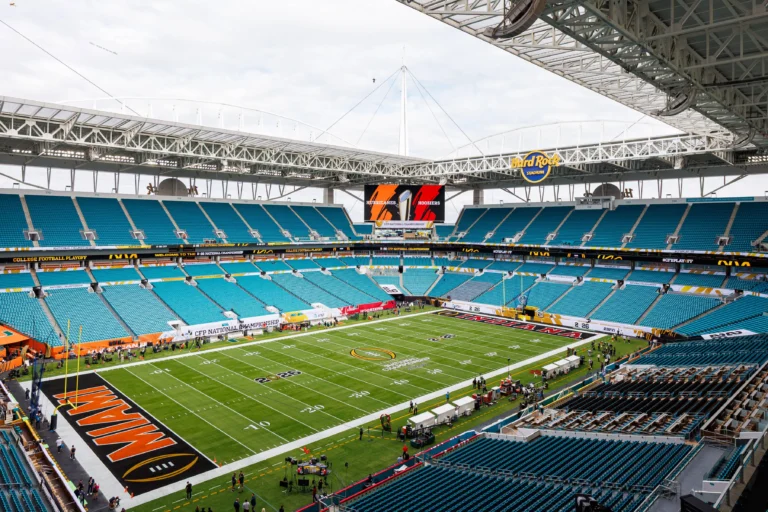
Miami – United States — Apprehensions and urgent warnings are mounting intensely within international sporting and organizational circles regarding the direct and potential ramifications of extreme weather events on the progression of the FIFA World Cup 2026. These growing fears crystallize alongside meteorological reports warning that several host cities and metropolitan sectors are vulnerable to severe thunderstorms, torrential downpours, and sudden macro-climatic disruptions that could strategically force the suspension or hours-long delay of scheduled matches to preserve the physical safety of players, technical delegations, and stadium audiences.
Continental Climate Variance and Uncompromising Lightning Protocols
As the geographical parameters of the tournament expand to span three entire sovereign territories—the United States, Canada, and Mexico—organizers confront unprecedented logistical and environmental challenges tied to the sharp variance in weather conditions among host municipalities. This operational friction peaks during the summer season, which traditionally witnesses record-breaking spikes in temperature along with heightened, widespread convective thunderstorm activity across key American states. Meteorological threat analysts indicate that multiple host cities slated to feature critical, high-stakes matches could be directly impacted by sudden frontal storms driven by severe cloud-to-ground lightning and destructive wind gusts. This reality dictates the mandatory execution of uncompromising safety protocols that require stopping play immediately and isolating crowds the moment localized monitoring assets tag any tangible threat to the safety of attendees within stadium structures or surrounding open-air fan zones.
Operational statutes enforced across major international federations and tournaments mandate the immediate suspension of sporting fixtures upon detecting direct indicators of lightning strikes or highly violent weather conditions. Play is strictly prohibited from resuming until comprehensive technical evaluations confirm that the atmospheric hazard has fully dissipated—a complex operational scenario that could trigger extensive scheduling logjams and broadcast delays in critical instances.
Suffocating Heatwaves and FIFA’s Real-Time Predictive Monitoring
Sovereign concerns are not exclusively anchored to the profile of thunder and rain sub-systems; they extend to encompass blistering heatwaves and historic spikes in relative humidity. These factors threaten to degrade player stamina and amplify physiological strain and muscle exhaustion during matches, particularly within stadiums situated in the southern corridors of the United States and Mexico. In response, local organizing committees, working in lockstep with FIFA, are drafting fully integrated and flexible emergency contingency blueprints. These configurations feature the deployment of advanced digital tracking arrays to monitor shifting weather architectures in real time, the mapping of smart evacuation pathways to funnel spectators toward indoor structural shelters, and the formulation of agile algorithms to reschedule compromised fixtures under absolute necessity.
Large-scale event management specialists and strategic advisors assert that global climate instability has transitioned into a core structural element governing the layout and scheduling of international tournaments. Radical, volatile weather variations are recurring at significantly higher frequencies compared to previous decades, imposing added operational and financial liabilities onto organizers and continental confederations. Furthermore, architectural engineers emphasize that the cutting-edge stadiums designated for the event—outfitted with advanced drainage systems and hyper-fast siphon plumbing—will play a major role in neutralizing flash-flooding risks. However, the threat of direct lightning strikes and localized electrical storms remains an unmanageable hazard that can only be countered by temporarily stopping play. As the countdown to the opening whistle narrows, the imperative for climate readiness scales up alongside security and organizational baselines to ensure the tournament navigates safely to port, preventing structural disruptions from fracturing the largest and most widely viewed sporting spectacle on Earth.