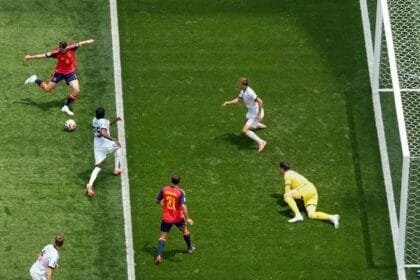
In a clash carrying a special character between two classic footballing schools, Spain and Belgium meet in the 2026 World Cup quarter-finals. This match is highly anticipated by football fans worldwide as one of the tournament’s most powerful matchups. The Spanish “Matadors,” known for their history and skill, collide with the Belgian “Red Devils,” who are seeking to write a new chapter in their World Cup history, turning the match into a sporting battle that extends beyond the pitch.
“Don Quixote” vs. “Tintin”
Some have dubbed this encounter “Don Quixote vs. Tintin,” a clever reference to the most famous literary figures representing the cultural identity of both countries. Don Quixote embodies the rebellious and dreamy Spanish spirit, while Tintin represents one of the most prominent Belgian cultural symbols that has traveled the world. This cultural dimension adds a unique flair to the meeting, transforming it from a mere football match into a battle of identity that millions around the world are waiting for, further enhancing the event’s massive media and fan appeal.
The Matador’s Ambition and Possession Style
The Spanish team enters the match following strong performances that have confirmed them as major title contenders. The team relies on its historic style of ball possession, precise short passing, and constant high pressure on the opponent. The group of young players on the roster has provided great vitality and tactical flexibility, enabling them to penetrate the strongest defenses, making them a formidable attacking force seeking to establish control from the very first minute.
The Red Devils’ Resilience and Attacking Efficiency
In contrast, the Belgian team successfully overcame strong competitors to reach the quarter-finals, benefiting from disciplined defensive organization and the ability to launch rapid, lethal counter-attacks. The Belgians are betting on the experience of several veteran players who aspire to achieve the best result in the history of Belgian football. This balance between organized defense and attacking efficiency is the most important weapon the “Red Devils” will rely on to stop the Spanish attacking wave and surprise their opponent at crucial moments.
Tactical Tests and Decisive Substitutions
Analysts believe the match is wide open to all possibilities, given the significant technical parity between the two teams. While Spain holds a slight advantage in terms of field control, Belgium remains capable of creating surprises by exploiting spaces. The match also represents a real tactical test for both coaching staffs, where success in reading the flow of the game and making appropriate substitutions will be a decisive factor in determining who qualifies for the semi-finals, especially with the intensity of the competition rising as the tournament nears its final stages.