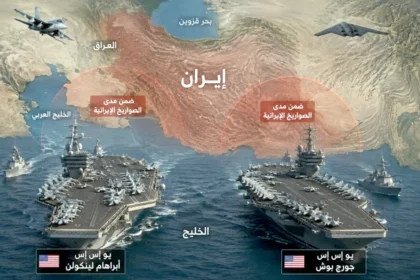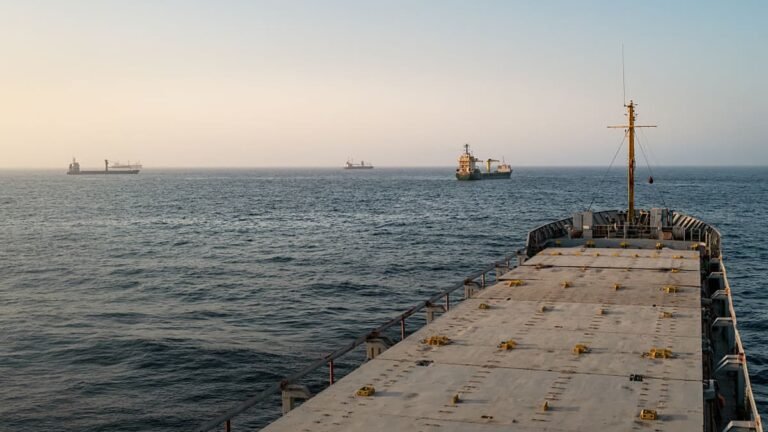
Washington – United States – Amid ongoing maritime tensions in one of the world’s most critical maritime chokepoints, the US Central Command has confirmed that its forces continue to work diligently to ensure freedom of navigation in the Strait of Hormuz. Meanwhile, the United States is monitoring field developments closely, leveling explicit accusations at Tehran for violating the ceasefire agreement by targeting commercial ships.
Direct Accusations of Threatening International Navigation
A spokesperson for the US Central Command told “Sky News Arabia” that Iran is committing clear violations of the ceasefire agreement by firing at commercial ships transiting the Strait of Hormuz. He emphasized that these actions not only constitute a breach of the agreement but also pose a direct and serious threat to the security of international navigation and the stability of global trade. Moreover, US forces continue to execute their strategic missions to protect shipping lanes and ensure the unhindered flow of commerce. This is done in fulfillment of their security commitments to regional partners.
Noticeable Decline in Iranian Military Capabilities
In his assessment of the situation on the ground, the spokesperson noted that recent US operations have succeeded in significantly undermining Iran’s ability to export violence beyond its borders. While acknowledging that Tehran still possesses an arsenal of drones and missiles, he confirmed that its operational capabilities have noticeably declined compared to previous periods. Furthermore, the US Command maintains a state of high alert, continuously assessing the military situation to deal immediately with any potential threats targeting US forces or navigation.
Containing Attacks and Diplomatic Efforts
The Central Command spokesperson offered reassurances that recent Iranian attacks have not resulted in significant or impactful damage, affirming that US forces and their allies remain fully prepared to execute their missions with high efficiency in the region. Meanwhile, these field developments occur at a time when the Strait of Hormuz is witnessing escalating tensions. This escalation coincides with intensive diplomatic efforts at both the regional and international levels. These efforts aim to salvage the ceasefire agreement and prevent the region from sliding into a comprehensive military confrontation. Such a conflict could disrupt the security of global energy supplies.