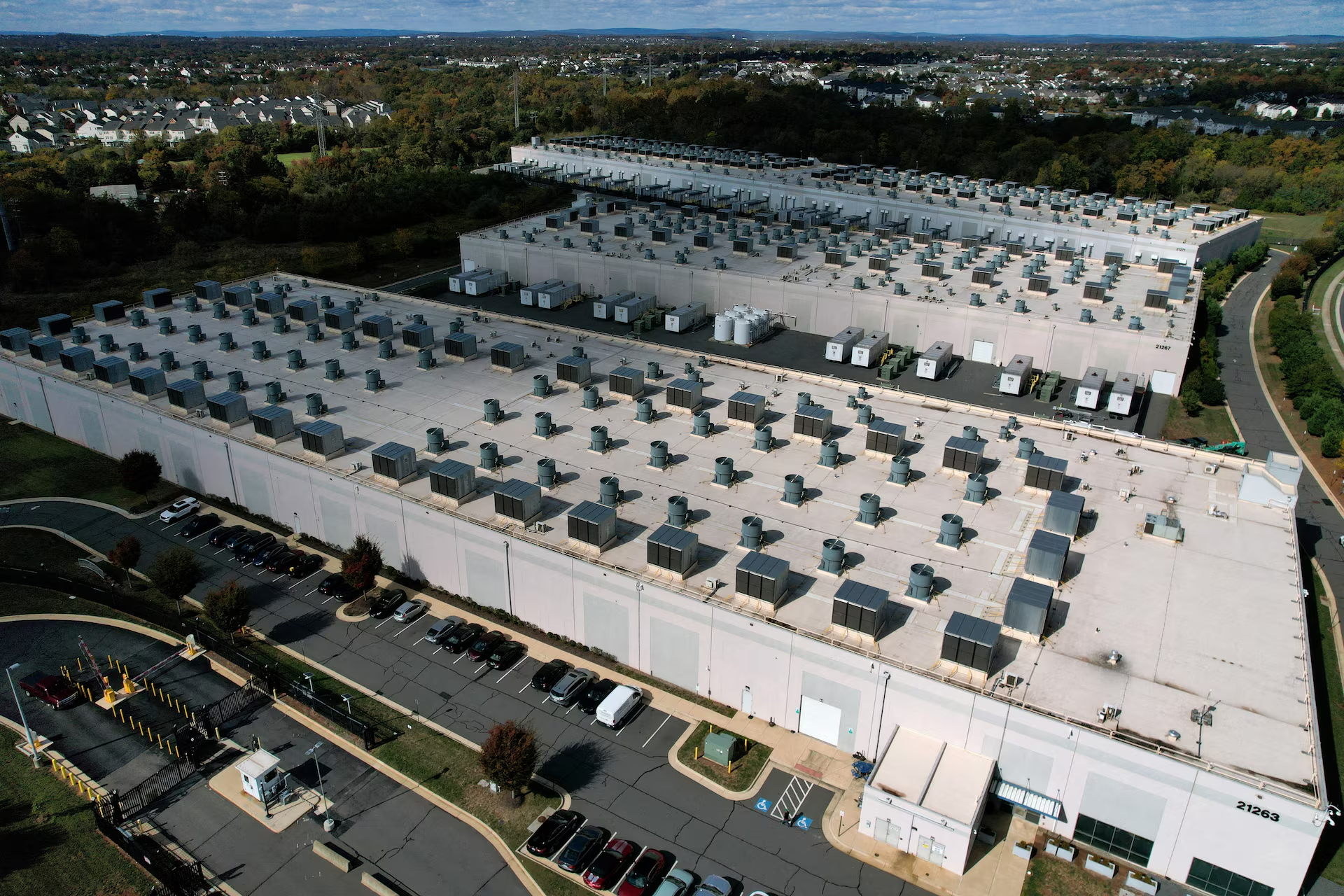
Washington, USA – The United States is bracing for a wave of widespread, coordinated protests against the rapid expansion of AI data centers. Activists are planning demonstrations in at least 125 locations across the country, marking the first national-level pushback against these projects. The protests reflect growing public opposition, fueled by fears regarding energy consumption, water usage, and the broader environmental footprint of these facilities.
“Humans First” Movement Targets “Uncontrolled Expansion”
The protests are spearheaded by a grassroots group known as “Humans First,” co-founded by a former leader of the conservative “Tea Party” movement. The group criticizes the current administration of these projects, arguing that the expansion is occurring without adequate oversight or community accountability. Organizers are demanding greater transparency and mandatory environmental assessments, labeling the current trajectory an “uncontrolled expansion” that disregards the rights of local communities.
Deepening Environmental and Social Concerns
In recent months, objections from residents across various US cities and towns have intensified, particularly after projects were approved despite significant local opposition. In several instances, residents discovered that local officials had signed confidential agreements with developers with minimal oversight. Key community concerns include potential spikes in electricity bills and pressure on local grids, the depletion of massive quantities of water required for server cooling, and opaque dealings between developers and local officials.
Low Public Support: A Reuters/Ipsos poll conducted in June showed that only about a third of Americans support the current pace of data center construction, with only 14% expressing willingness to support hosting a data center in their area for tech giants like Meta, Alphabet, Amazon, Microsoft, and Elon Musk’s xAI.
The “Data Center Coalition,” the primary lobbying group representing the industry, has not issued a comment regarding the protests. However, it has previously stated that companies in the sector are committed to operating as responsible partners within the communities that host their projects.