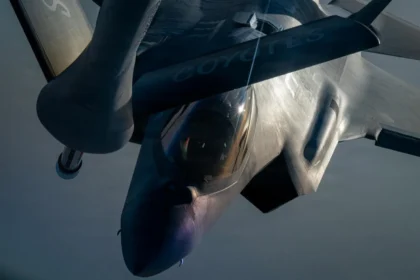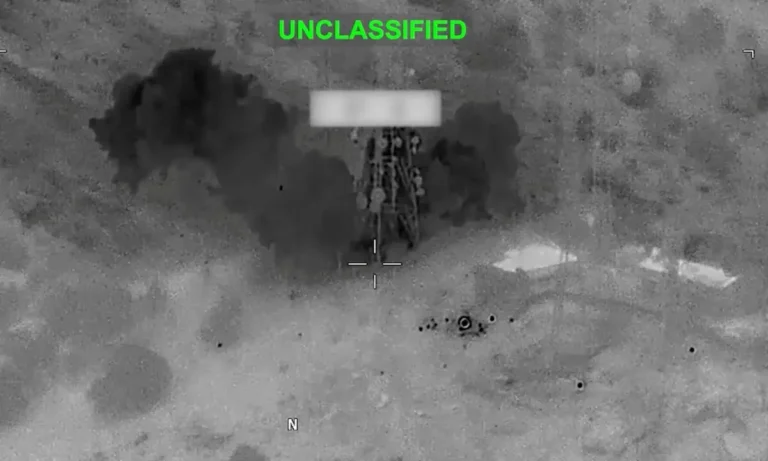
Tehran, Iran – The last few hours have witnessed a new military escalation, with Iranian media reporting that US forces carried out three airstrikes targeting sites in the strategic Hormozgan province in southern Iran. This development is part of the “seventh wave” of ongoing US military operations that have continued for seven consecutive nights. These operations aim to undermine Iranian military capabilities, amidst reports confirming that the scope of targets has expanded to include bridges, power plants, and vital infrastructure, further fueling fears that the region is sliding into a comprehensive regional conflict.
Hormozgan Strikes and Expanding the Scope of Targeting
Field reports confirmed that the recent strikes hit areas near “Serik” in the Hormozgan province, an area that has become the theater for intensive operations. These strikes come days after vital bridges and energy facilities were targeted in the Hormozgan and Sistan-Baluchestan provinces, in a move Washington described as part of a systematic campaign to disrupt Iranian military and logistical capabilities linked to securing the Strait of Hormuz. In response, Iranian authorities reported casualties and damage to utility facilities, including water and electricity supply facilities, resulting from these attacks, which Tehran characterizes as assaults on civilian targets.
Reciprocal Escalation and Fears of Total War
This escalation comes amidst a sharp exchange of military messages, with Iran accusing the United States of waging “total war” on its infrastructure, while Washington insists that its operations are directed at “curbing Iranian influence” and securing freedom of navigation in the strait. This has coincided with reports of Iranian attacks targeting US interests and bases in Gulf countries, turning the region into an open arena of confrontation. International calls, including United Nations warnings, have continued, urging de-escalation and a return to diplomatic tracks; however, the field situation indicates that both parties remain entrenched in their positions, with growing signs of “mutual exhaustion.”
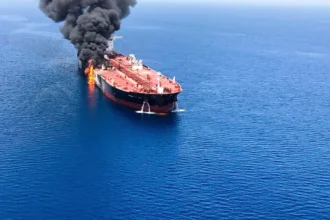
International Anticipation: Regional and international capitals are monitoring the situation in light of the “seventh wave” of strikes. Observers are questioning whether these operations are a prelude to a ground offensive or if they will remain limited to a strategy of “systematic exhaustion” of Iran’s strategic facilities, at a time when the Strait of Hormuz continues to suffer from near-total paralysis in global commercial maritime traffic.