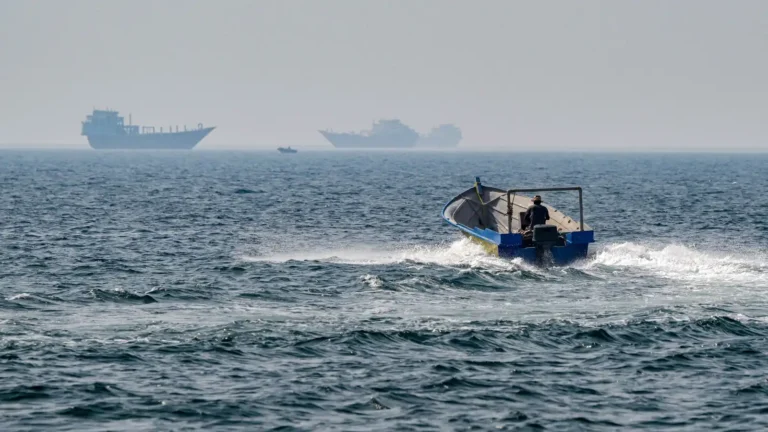
London, UK – The UK Maritime Trade Operations (UKMTO) has revealed shocking and unprecedented figures regarding the paralysis of commercial shipping in the vital Strait of Hormuz. Transit traffic has plummeted to just 17 percent of its pre-conflict levels, directly threatening global energy supply chains.
Disastrous figures: Only 151 ships crossed the strait in a week
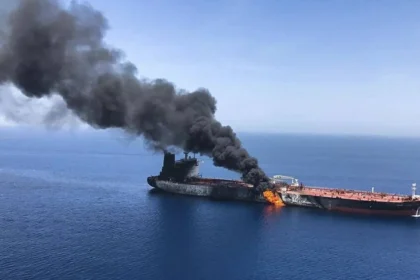
The report issued by the British agency revealed that only 151 vessels successfully navigated the narrow waterway, either entering or exiting, within a seven-day period. The agency also recorded approximately 56 official reports of damage and violations against various vessels transiting the Strait of Hormuz and its adjacent territorial waters since the outbreak of military confrontation between the United States and Iran on February 28. However, this substantial tally does not include the two attacks reported last Thursday. On that day, the Abu Dhabi National Oil Company (ADNOC) announced that two of its vessels had been directly attacked while transiting the strait.
Trump’s pledges and a decisive Iranian response
On the political front, US President Donald Trump sparked widespread reactions with statements he made on Friday, asserting his intention to declare the Strait of Hormuz “American territory” after “defeating Iran.” The American threat was met with a swift and firm response from the Iranian capital. Iranian Deputy Foreign Minister Kazem Gharibabadi declared that the Strait of Hormuz “cannot be seized with a tweet or by an aircraft carrier.” This statement blatantly challenged American intentions to control the strategic waterway.
The Omani route is the most dangerous, with a complete absence of American ships.
On the ground, data indicated that the southern Omani route, a temporary and alternative passage within the Strait of Hormuz, remains the most dangerous and volatile area. It alone witnessed 16 of the 18 missile attacks reported by the British Maritime Safety Authority (MSA) since July 6th. In terms of national traffic, Panamanian and Liberian vessels topped the list with 12 each. Conversely, no US-flagged vessels were recorded. Oil product tankers, carrying refined petroleum derivatives, were the most common type of vessel transiting the strait. While a slight improvement was observed compared to the previous week, when traffic did not exceed 4 percent, the current situation reflects a complete standstill and significant security concerns.