Seoul, South Korea – South Korean President Lee Jae-myung has launched a new diplomatic initiative aimed at ending the decades-long state of war. He has called on North Korea to come to the negotiating table for direct talks to discuss ways to curb its nuclear program and establish lasting peace.
Presidential initiative to launch direct talks with Pyongyang
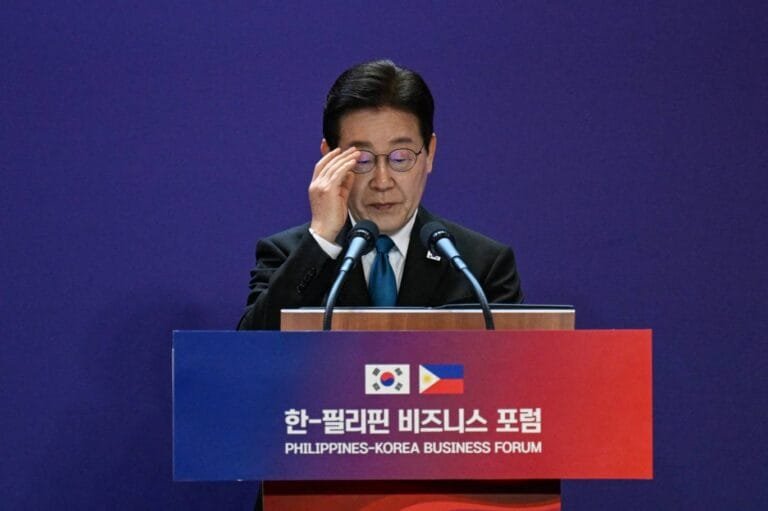
South Korean President Lee Jae-myung announced his proposal for immediate direct talks with North Korea during a keynote address at the official ceremony commemorating the 81st anniversary of Liberation Day in Seoul. The ceremony was attended by approximately 3,000 people, including senior officials, diplomats, and families of independence fighters. According to Yonhap News Agency, the president called on North Korea to set aside all mutual military threats and engage in serious and direct negotiations as the two main parties involved in the crisis. He emphasized that these negotiations could include practical and effective mechanisms to reduce Pyongyang’s nuclear capabilities and address the root causes of the tension.
The nature of the conflict and Seoul’s commitment to peaceful coexistence
It is worth noting that the two Koreas have technically remained at war since the end of the Korean War (1950-1953). They only signed an armistice, not a formal peace treaty. President Lee sought to change this complex historical situation, aiming to replace it with a stable security arrangement based on mutual respect and peaceful coexistence. Despite Pyongyang’s continued intransigence and its failure to respond to Seoul’s repeated diplomatic initiatives, the Lee administration has reaffirmed its commitment to strategic dialogue. It has also rejected any scenario that seeks unification through forced assimilation or the use of hostilities.
Regional cooperation and an advanced global vision
On the subject of foreign relations and regional diplomacy, the South Korean president praised the proactive diplomacy with Japan over the past year. He emphasized that it had effectively contributed to building trust and expanding areas of cooperation. This cooperation encompassed vital, advanced sectors such as supply chains, energy security, and advanced technologies. He also expressed his hope for a new era of peace and prosperity with Tokyo. Lee concluded his speech by reiterating his ambitious vision of transforming South Korea into an indispensable nation on the international stage. He stated that this is achievable by leading the revolution in advanced technologies and opening up broad horizons for industrial development amidst the demands of rapid global transformations.