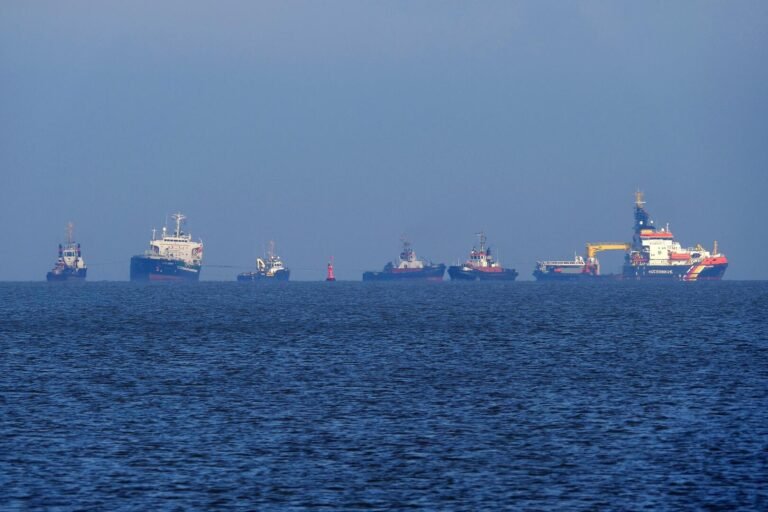
Ankara, Turkey – Turkish authorities announced that a second merchant ship owned by Turkish companies successfully transited the strategic Strait of Hormuz. This strait has become an open battleground and a theater for extensive land and sea military operations.
Diplomatic moves and results on the ground
Turkish Transport and Infrastructure Minister Abdulkadir Uraloğlu stated, in remarks carried by AFP and CNN Türk, that a second Turkish-flagged vessel had successfully transited the strait.
The minister explained that this was the result of political initiatives and direct negotiations. He also noted that the status of ships using Iranian ports or transporting goods linked to Tehran had facilitated their obtaining the necessary permits to pass through. This comes amidst tightened restrictions imposed by regional and international powers.
Ships pile up in crisis corridor
Ural Oglu revealed the extent of the crisis facing Turkish maritime trade in the region, stating that 15 ships owned by Turkish companies had been stranded and waiting to pass through the straits since February 28.
The minister confirmed that “only two of those 15 ships have managed to pass through so far.” This indicates the continued security risks and logistical difficulties facing the rest of the merchant fleet stranded in the Gulf waters.
Identity of transiting ships
According to technical reports cited by CNN Turk, the two ships that successfully breached the Strait of Hormuz were the Rosana and the Neraki. The first ship had been granted permission to pass through on March 13 with explicit authorization from Iranian authorities. The minister did not specify the exact time of the second ship’s passage, simply confirming the success of the operation. These developments highlight Turkey’s balanced role in the current conflict; Ankara seeks to secure its supply chains and protect the interests of Turkish ship owners through open channels of communication with all parties involved. This comes at a time when international shipping is experiencing near-total paralysis, escalating insurance costs, and military risks that threaten the permanent closure of the strait.