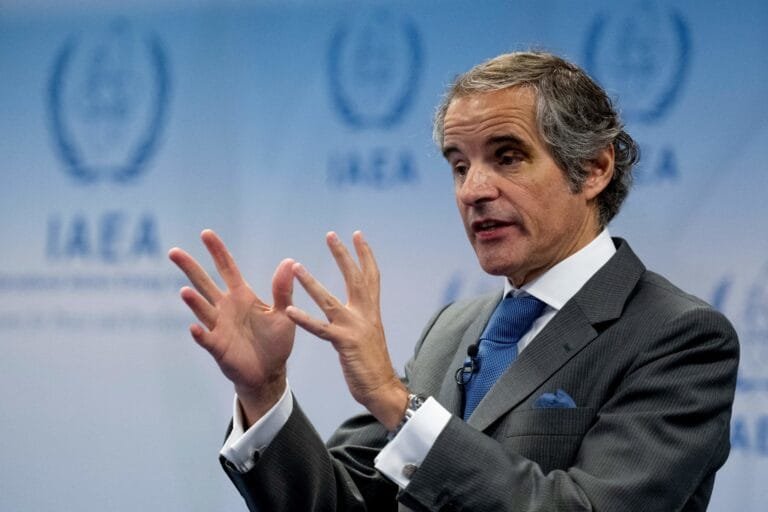
Vienna, Austria – Rafael Grossi, head of the International Atomic Energy Agency (IAEA), confirmed that current estimates indicate Iran’s stockpiles of enriched uranium remain within its nuclear facilities. He also noted that no “significant movements” of these materials have been detected at the sites damaged by recent Israeli and US strikes.
The need for field verification
In a press statement, Grossi emphasized that the agency’s current assessment, based on pre-conflict inspections and satellite imagery, gives “a general impression that the material is still there.” However, the head of the watchdog stressed that this assessment remains preliminary. He emphasized the need for agency inspectors to physically return to the sites to verify the status of the stockpiles on the ground. This is also to ensure that “everything is in its proper place,” particularly in areas where access has been disrupted. Grossi noted that the agency has not detected any suspicious transfers since its last formal inspection in 2015. He also reiterated the agency’s full readiness to continue carrying out its technical mandate in accordance with the Memorandum of Understanding that grants it the right to monitor Iranian facilities.
Tehran’s position: Inspections are contingent on a final agreement.
In contrast, Tehran appears to be maintaining a hardline stance on allowing inspectors to return. Kazem Gharibabadi, Iran’s deputy foreign minister, stated on Thursday that Iran currently has no plans to grant international inspectors access to its nuclear facilities. Gharibabadi emphasized that this technical issue will only be discussed within the framework of a comprehensive “final agreement” with the United States. Such an agreement must guarantee the implementation of concrete steps to lift the sanctions imposed on the country.
The Iranian statement presents the International Atomic Energy Agency (IAEA) with a significant diplomatic challenge, as the technical aspects of the nuclear issue intersect with the complex political negotiations between Tehran and Washington.
The International Atomic Energy Agency (IAEA) is facing increasing pressure to ensure transparency in Iran’s nuclear program amidst regional security uncertainties. With Iranian nuclear facilities remaining outside direct inspection for some time, the monitoring of nuclear materials and verification of the peaceful nature of Iran’s nuclear program remains a thorny issue at the top of the international community’s agenda. All eyes are therefore on the outcome of the political negotiations that Tehran has made a precondition for reopening its facilities to IAEA inspectors.