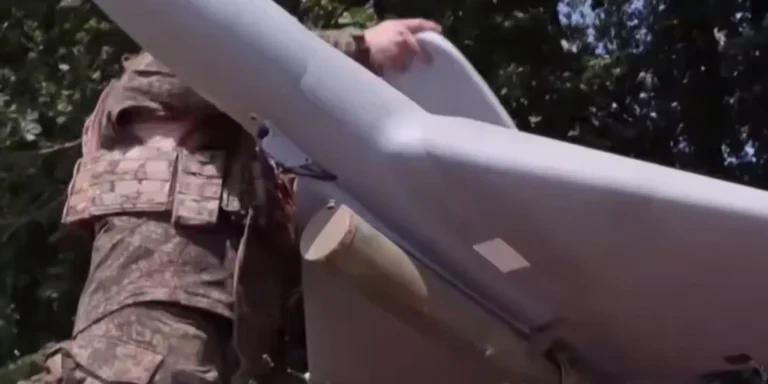
Moscow, Russia — Commercial satellite imagery has revealed a rapid expansion in Russian infrastructure dedicated to launching long-range attack drones, introducing new and lengthened launch tracks designed for larger, next-generation models. Consequently, Moscow aims to significantly scale up its long-range strike capacity against Ukrainian infrastructure. Furthermore, this infrastructure development offers enhanced logistical flexibility for drone storage and support operations.
New Infrastructure and Extended Launch Paths
Satellite intelligence analysis indicates that at least 10 Russian sites have undergone construction or expansion, housing a total of 59 launch tracks. Additionally, nearly 20 of these paths feature extended lengths specifically engineered to support heavier, single-way attack drones with larger payload capacities.
Assessments show that several facilities were repurposed from former military airfields and civilian airports, while others were constructed in remote regions. Consequently, tracking data confirms that at least seven of these sites have already been utilized in recent military operations.
Soaring Production Rates and Strategic Implications
The expansion of launch facilities coincides with a dramatic increase in domestic industrial production, with estimates indicating that the Alabuga complex could exceed 50,000 attack drones produced in 2026. Additionally, Russian forces launched approximately 16,000 long-range drones in the first quarter of 2026 alone, reflecting a substantial year-over-year increase.
Finally, the geographically dispersed launch network expands Russia’s operational reach and strike posture across the region. Ultimately, defense analysts and NATO observers continue monitoring these structural shifts to evaluate their broader impact on regional security.