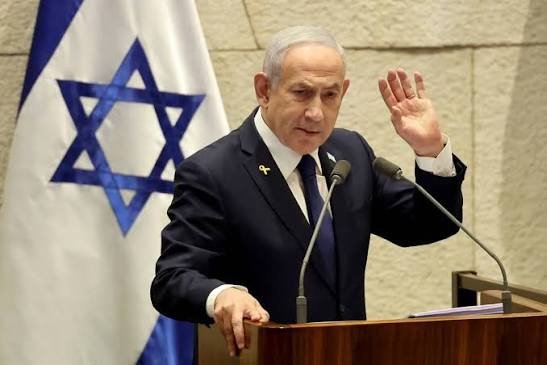
Tel Aviv, Israel – A recent poll conducted by the Israeli newspaper Maariv reveals significant shifts in the Israeli political landscape. This comes as Prime Minister Benjamin Netanyahu takes the dramatic step of breaking away from the Likud party and forming a new party to contest the upcoming elections.
New seating chart
The poll results indicate that Netanyahu, if he were to run as an independent, would secure 16 seats, making him the third-largest party in the Knesset. In contrast, Likud, without its current leadership, would suffer a sharp decline, winning no more than 7 seats. While the combined total of the two parties (23 seats) represents a slight increase of 3 seats from Likud’s current tally (21 seats), this split is causing considerable concern within the right-wing camp. As for the other parties, the poll showed relative stability at the top. Gadi Eisenkot’s Yesh Atid party and Naftali Bennett’s and Yair Lapid’s Ma’an parties are vying for first place, each with 20 seats. Meanwhile, Avigdor Lieberman’s Yisrael Beiteinu party is projected to drop to 10 seats.
Repercussions for the governing coalition
The most worrying outcome for Netanyahu is the direct impact this scenario would have on the cohesion of the governing coalition. The poll predicts his bloc would drop to just 49 seats, compared to 60 for the opposition parties, while the Arab parties would retain 11. These figures confirm that a split would effectively deprive the coalition of its majority and control within the Knesset. The poll also revealed widespread pessimism regarding the possibility of national unity. 62% of Israelis believe it is impossible to form a “unity” government that brings together parties from across the political spectrum after the elections, while only 14% see any chance of such a government.
electoral resolve
Regarding voter turnout, the data revealed a significant disparity in “electoral certainty.” 74% of respondents expressed certainty of participating. Arab parties recorded the highest level of certainty at 82%, followed by Zionist opposition parties at 80%. This figure dropped to only 72% among supporters of the ruling coalition parties. This reflects a sense of frustration or uncertainty within the current government’s electoral base.