Berlin, Germany – In a move aimed at conserving water resources and protecting threatened ecosystems, German authorities have imposed a strict ban on diverting river water without official authorization. This comes as the country faces an unprecedented drought expected in the summer of 2026. Penalties for violating this ban can reach hefty fines of up to €50,000.
Emergency measures in North Rhine-Westphalia
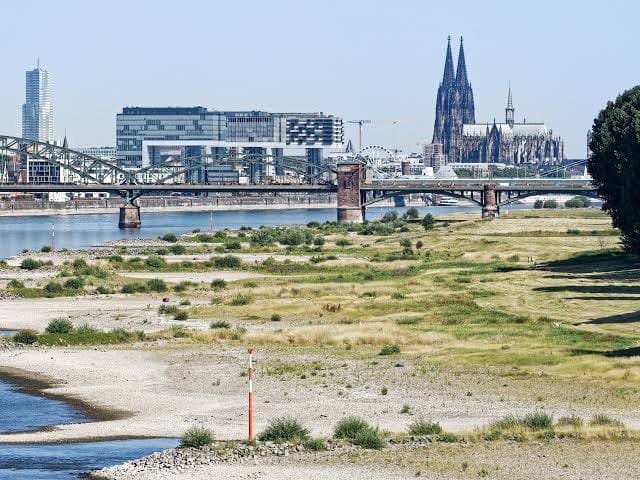
Authorities in the state of North Rhine-Westphalia have announced this strict measure due to the sharp and significant drop in water levels in several vital rivers in the state. According to Deutschlandfunk radio, an official statement from local authorities reads: “Due to the significant decrease in water levels in several rivers, drawing water from them is prohibited. This is attributed to the lack of rainfall and the persistently high temperatures of recent weeks.” Furthermore, authorities have clearly warned that any disregard for this ban will result in fines of up to €50,000. This measure aims to deter any attempts to deplete water resources during these critical times.
The restrictions have been expanded to include other states and cities.
The crisis is not limited to the state of North Rhine-Westphalia alone, as other German states, such as Baden-Württemberg and Thuringia, have begun to implement similar restrictions to deal with water shortages. In the city of Munich, on Thursday, the authorities issued an urgent appeal to its residents to voluntarily rationalize water consumption. She also pointed out that the city’s water supplies are facing severe and unprecedented pressure as a result of the severe heat wave sweeping the region.
Economic threats and environmental challenges
For his part, German Environment Minister Carsten Schneider highlighted the serious consequences of this phenomenon. In previous statements to the Handelsblatt newspaper, he emphasized that the intense heat wave and water shortages are not only affecting the environment but also causing significant economic damage to the country. Schneider pointed out that the ongoing drought, and the accompanying decline in groundwater levels, now poses an existential threat to the domestic production sector. This puts the German government under increasing pressure to develop long-term strategies for water management and adaptation to accelerating climate change.
These measures come at a time of heightened environmental awareness in Germany. The hefty fines also reflect the authorities’ seriousness in addressing the climate challenges that are creating a new water reality. This requires a concerted effort between government initiatives and citizen behavior to ensure the sustainability of resources for future generations.