Washington, DC – US President Donald Trump’s strategy toward Iran doesn’t appear to be lacking so much as it seems stuck on the most difficult point: how to translate military force and economic pressure into a political settlement that Washington can declare a victory.
Since the confrontation escalated into war, US objectives have expanded from preventing Iran from acquiring a nuclear weapon to weakening its missile and military capabilities, diminishing its ability to support its regional allies, and imposing new security arrangements in the region.
But the breadth of these objectives has made defining “victory” more complex, especially since military strikes can destroy facilities and capabilities, but they cannot eliminate nuclear knowledge or guarantee that destroyed capabilities will not be rebuilt.
From pressure to war… then back to negotiation
From the outset, Trump relied on a combination of economic pressure, military threats, and negotiations before the confrontation escalated into open warfare. Following the military operations, diplomacy returned to the scene through indirect contacts and negotiations, but it has yet to produce a lasting agreement. Analyses from American research centers indicate that Washington faces a fundamental dilemma: linking the end of the war to reaching a nuclear agreement makes achieving a final settlement more difficult, especially given the lack of trust between the two sides. The Council on Foreign Relations points out that military force can delay the Iranian nuclear program or destroy parts of its infrastructure, but it cannot, on its own, eliminate the knowledge and expertise that Iran has accumulated over the years.
The problem isn’t the pressure… it’s the end result.
The fundamental paradox is that Trump’s strategy appears clearer in its tools than its ultimate goals. The United States can increase sanctions, target financial networks, tighten the noose on oil exports, and maintain military superiority. But the more difficult question is: what happens if these measures fail to bring Iran to its knees? Iran, which has lived under sanctions for years, has extensive experience in circumventing them and strong incentives to preserve its core capabilities and avoid making concessions it perceives as a threat to the regime’s survival. The Stimson Center argues that the war has not yet achieved its stated maximalist objectives, including the elimination of Iran’s missile capabilities or the complete eradication of its nuclear program, reflecting the limitations of a maximalist strategy.
Iran does not need to win
Conversely, Tehran does not necessarily need to achieve a military victory over the United States. Preventing Washington from translating its military superiority into complete political surrender is sufficient. Despite the vast disparity in military capabilities, Iran can leverage its geographic location, missile capabilities, regional networks, and influence over energy and maritime traffic to raise the cost of continuing the war. The Strait of Hormuz is paramount among these tools, having transformed from a maritime and economic issue into a fundamental element in military and diplomatic calculations. The US Department of Defense affirms that restoring freedom of navigation in the Strait and protecting trade have become central missions for US forces in the region. Thus, the equation has shifted: Iran is no longer alone in needing to end the crisis; Washington and its allies are also concerned with reducing its cost to energy markets and the global economy.
Sanctions: The last resort?
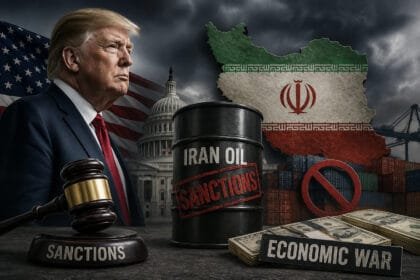
With the diplomatic track faltering, the US administration has returned to intensifying economic pressure. The new sanctions target the oil and financial sectors, as well as the networks of intermediaries and companies that help Iran circumvent US restrictions. The US Treasury Department describes this policy as part of a strategy targeting Tehran’s ability to generate and move funds outside the international financial system.
But the sanctions present another dilemma. They may weaken the Iranian economy, but they do not guarantee a change in the regime’s behavior. In fact, they could push it to rely more heavily on the parallel economy, strengthen ties with China and Russia, and tighten its internal control. This highlights the gap between inflicting pain on Iran and forcing it to sign an agreement.
Nuclear weapons: a goal that is difficult to achieve by force.
The nuclear dilemma is the most complex. The United States can target nuclear facilities, but it cannot destroy the knowledge possessed by Iranian scientists. Moreover, using force against a country with a nuclear program could lead its decision-makers to the opposite conclusion of the American objective: that possessing a nuclear deterrent is the best guarantee against future attacks. Specialized studies in nuclear nonproliferation warn that military pressure alone could lead to greater secrecy rather than cooperation and transparency. Therefore, any lasting settlement will require an international verification mechanism, a clear role for the International Atomic Energy Agency, and political and economic arrangements that go beyond simply destroying facilities.
Trump’s political dilemma
Trump now faces three main paths.
First: Continued escalation.
This option maintains pressure on Iran but raises the cost of war and increases the risk of its expansion.
Second: Accepting a settlement that falls short of the maximum demands.
This path could end the war, but it carries a political cost for Trump if Iranian concessions are perceived as limited.
Third: Remaining in a gray area between war and negotiation.
This is the most draining scenario, as the United States achieves neither a decisive victory nor does Iran obtain a settlement that relieves the pressure.
Herein lies the dilemma for the American president: the lower he lowers his demands, the closer he gets to a deal, but he risks appearing to back down; the higher he raises his demands, the more difficult it becomes to end the war.
What might a realistic deal look like?
The indicators emerging from American studies do not point to a deal based on Iran’s complete surrender, but rather to an interim settlement that could combine several elements.
On the nuclear issue, the deal might include freezing or reducing enrichment levels, along with a more rigorous inspection and monitoring regime.
In the military sphere, it might focus on specific restrictions on certain missile capabilities, instead of attempting to dismantle Iran’s entire arsenal.
In return, Washington could offer a gradual and conditional easing of sanctions, along with arrangements to guarantee freedom of navigation in the Strait of Hormuz.
As for the regional issue, it might take the form of understandings regarding attacks on American and allied forces and the activities of Iranian-backed armed groups.
However, the biggest obstacle will remain guarantees for the agreement’s implementation. Iran wants assurances that Washington will not withdraw from the agreement again, while the United States wants guarantees that Tehran will not use sanctions relief to rebuild its capabilities.
The real test
Therefore, the question is no longer whether Trump is capable of inflicting massive damage on Iran. The answer to that seems obvious. The more difficult question is whether Washington can translate its military and economic superiority into a stable agreement. There is a difference between destroying a facility and changing a country’s behavior, and between weakening a military capability and producing lasting security arrangements. This may be the true test of Trump’s strategy. If Washington can use pressure to produce a verifiable and enforceable interim agreement, then escalation will become part of a successful negotiating strategy. However, if the pressure continues without sufficient Iranian concessions, the strategy could become a vicious cycle: escalation that raises costs for Iran, followed by an Iranian response that raises costs for the United States and its allies, and then another round of escalation with no clear political end in sight. In this case, the problem will not be that Trump lacks a strategy toward Iran, but rather that the pressure strategy, which has succeeded in damaging Tehran, has not yet produced a clear exit strategy. Here, the real battle is not about who can deliver the hardest blow, but about who can craft a deal that allows both sides to end the war without either having to declare themselves the loser.