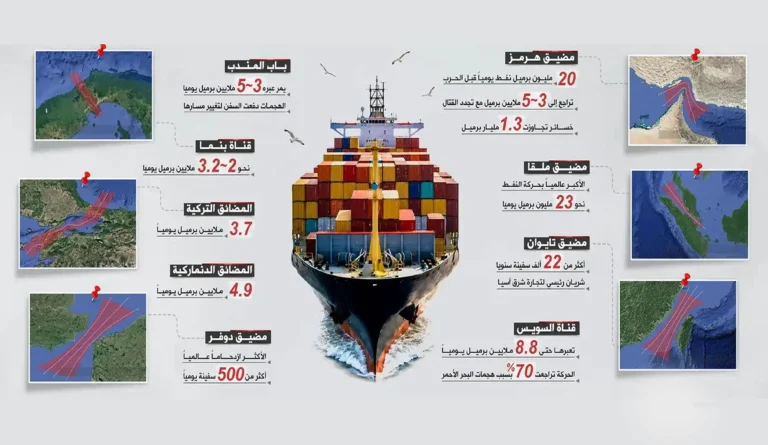
London, UK – Sea straits have long been strategic points in international conflicts, as their control or closure has altered the course of wars and reshaped the balance of power between nations.
With escalating tensions in the Gulf region and renewed focus on the Strait of Hormuz, interest has returned
to the history of these straits and their role in influencing the global economy and military operations.
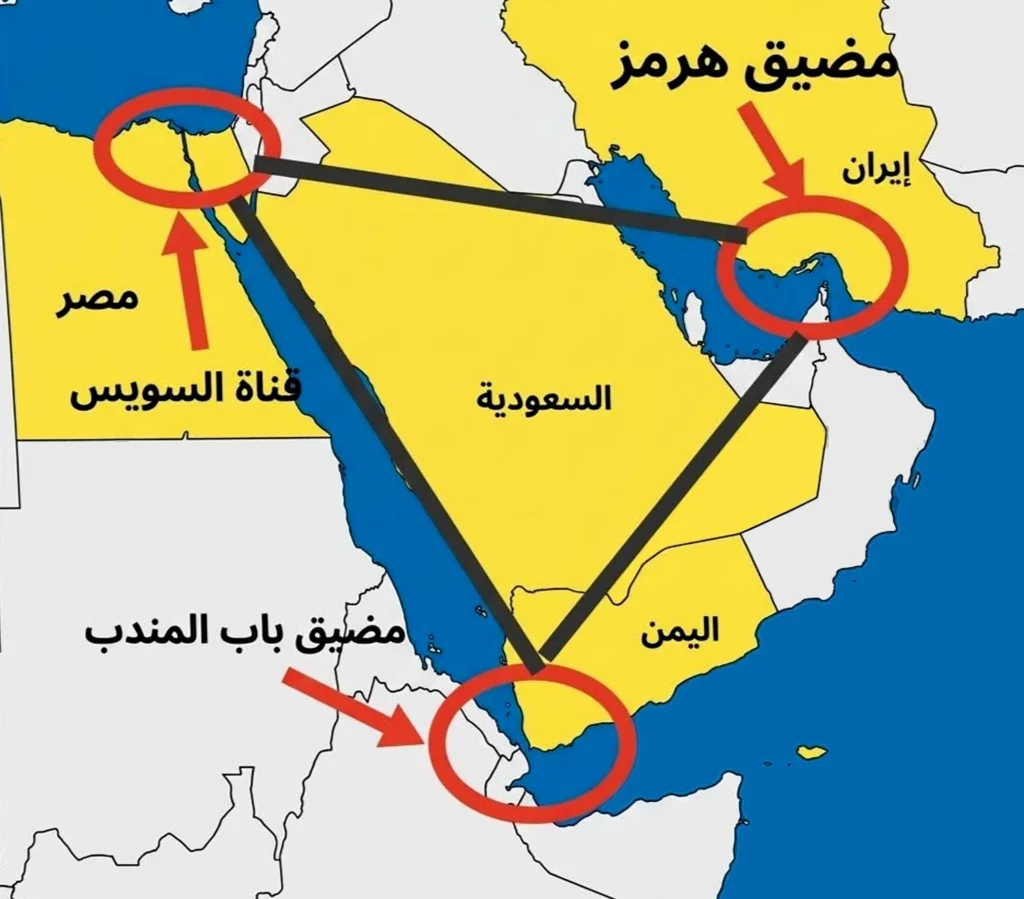
The Strait of Hormuz is one of the world’s most important maritime chokepoints,
through which a significant portion of global oil and gas exports pass,
making it a pivotal point for international trade and energy security.
Therefore, any threat to navigation through it has a swift impact on oil prices and global supply chains.
Crucial roles in major conflicts
Throughout history, maritime straits have played crucial roles in major conflicts. The Dardanelles was a key axis during World War I, when Allied forces attempted to breach it to reach the Ottoman capital, Istanbul.
However, the campaign ended in a major defeat at the Battle of Gallipoli, which altered the course of the war on that front.
Similarly, the Strait of Gibraltar was a strategic objective during World War II,
as the warring powers sought to secure control of the western entrance to the Mediterranean Sea
to maintain military and trade supply lines between Europe and Africa.
In the Middle East, the Strait of Tiran emerged as a major source of tension
between Egypt and Israel before the June 1967 war.
Its closure to Israeli shipping escalated the crisis, ultimately leading to war,
a clear example of the influence of maritime chokepoints on military and political decisions.
Geopolitical pressure tools
The Suez Canal, while not a natural strait, has repeatedly demonstrated its strategic importance,
whether during the Tripartite Aggression against Egypt in 1956
or during periods of closure that disrupted global trade and forced ships to take longer and more expensive sea routes.
Strategic affairs experts believe that maritime straits are no longer merely shipping lanes,
but have become tools of geopolitical pressure used by states to enhance their influence or protect their interests,
especially given the increasing global reliance on maritime trade,
which transports the majority of goods and energy between continents.
Analysts emphasize that any disruption to navigation through these vital straits does not only affect the parties to the conflict,
but extends to the entire global economy through increased shipping and insurance costs,
fluctuating energy prices, and disruptions to supply chains.
This makes the security of these maritime routes an international issue
that transcends the borders of the countries bordering them.