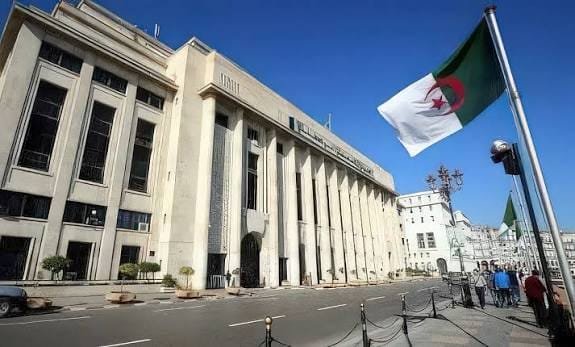
Algeria – Voting began in Algeria this morning, Thursday, July 2, 2026, to elect members of the National People’s Assembly (the lower house of parliament) for a five-year legislative term. This election has garnered significant political and public attention.
Initial participation rates
The Independent National Election Authority announced that voter turnout within Algeria reached 3.05 percent by 10:00 AM, just two hours after polling stations opened. As for the Algerian community residing abroad, turnout reached 8.49 percent by 11:00 AM.
These elections are of exceptional importance, as they represent the first practical test of the political reforms that came into effect in 2016. These reforms included amending the constitution, revising the electoral law, and adopting the new organic law regulating political parties. This step aims to modernize political life in the country.
Council powers and structure
The elected National People’s Assembly is responsible for legislation and oversight, reviewing and approving draft laws and financial laws, and monitoring the government’s work through constitutional mechanisms. In addition, the Assembly has the power to grant or withdraw confidence from the government. In its tenth term, the Assembly comprises 407 seats distributed across 77 electoral districts, 69 of which are within Algeria and 8 for the Algerian diaspora.
These elections are highly competitive, with 793 electoral lists comprising approximately 10,000 candidates. These lists are divided into 613 party lists, one party alliance, and 125 independent lists. A strong presence of youth and women is noted, with 54% of candidates being under the age of 40. Women candidates also represent 21% of the total number of candidates.
The return of the opposition to the scene
This election is notable for the return of opposition parties that boycotted the previous elections, such as the Socialist Forces Front (FFS), the Rally for Culture and Democracy (RCD), and the Workers’ Party (PT). This strengthens the political diversity in the next parliament. Polling stations are scheduled to close at 7:00 PM Algerian time, with the possibility of an additional hour. Official calls have been made for citizens to participate in this national event, which is expected to shape the future political landscape of Algeria.