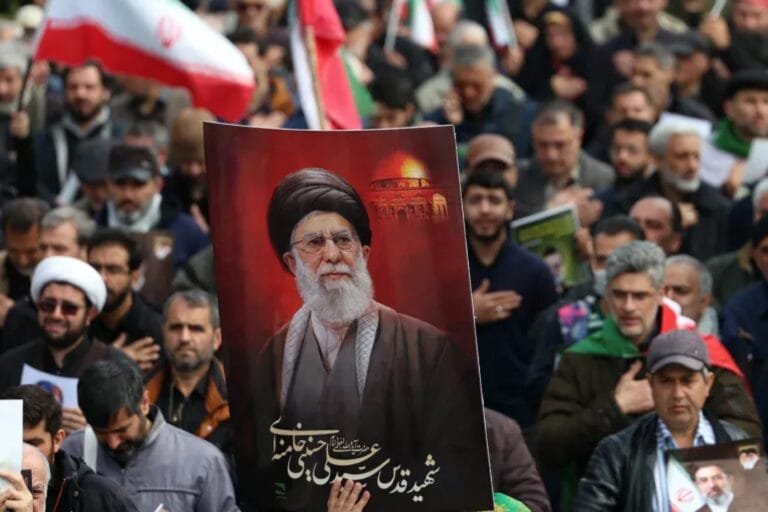
Tehran, Iran – The Iranian military leadership issued a stern warning to the United States and Israel on Thursday against any military adventure or attack during the funeral ceremonies for the late Iranian Supreme Leader Ali Khamenei. Tehran asserted that any “miscalculation” by its enemies would be met with a “swift and immediate” military response from its armed forces.
High-level military warning
In an official statement broadcast by Iranian media, the commander of the Khatam al-Anbiya military headquarters, Ali Abdollahi, stressed that “Iran’s enemies, especially the United States and the Zionist entity, must be careful not to miscalculate.” He also indicated that the Iranian armed forces are fully prepared to carry out a strategic and decisive response to any threat or attack against Iranian sovereignty or leadership.
Funeral schedule
The funeral procession is scheduled to begin on July 4th in Tehran. It will continue for several days, moving to holy cities such as Qom, before finally reaching its destination in Mashhad—the deceased’s birthplace—where he will be laid to rest on July 9th. The official plan also includes additional ceremonies in Iraq. This has prompted heightened security measures across the region.
Escalation atmosphere and assassination threats
This warning comes amid heightened tensions and mutual escalation, following statements by Iranian Foreign Minister Abbas Araqchi, who affirmed Tehran’s commitment to respond “immediately and forcefully” to any harm to the people or the leadership. The rhetoric intensified after direct threats from Israeli Defense Minister Yisrael Katz, who identified the current Supreme Leader, Mojtaba Khamenei, as a target for assassination, prompting Tehran to raise its alert level.
Security alert and air travel restrictions
On the ground, Iranian authorities announced an unprecedented security mobilization in all cities where funeral processions will take place. The head of Iran’s Civil Aviation Organization announced the imposition of temporary and strict restrictions on airspace over Tehran, Mashhad, and other relevant cities. This was also intended to ensure the protection of airspace and regulate air traffic during the funeral period.
These regional warnings have created a state of high alert, as indications suggest that Tehran is treating these ceremonies not merely as a funeral event, but as a crucial security and military test given the current regional circumstances. The international community is closely watching to see whether these messages will succeed in deterring any military action, or whether the region is heading towards a new phase of direct and open escalation.