Beirut, Lebanon – In a move carrying significant political implications for regional coordination, Syrian Foreign Minister Asaad al-Sheibani arrived in the Lebanese capital, Beirut, on Thursday for an official visit. This is the first such visit since media reports circulated about the possibility of Syrian forces undertaking security operations against Hezbollah within Lebanon.
Damascus’s stance on Hezbollah: “Self-interest is the criterion.”
During his meeting with Lebanese Parliament Speaker Nabih Berri, Syrian Foreign Minister Asaad al-Shaibani put an end to the speculation surrounding relations with Hezbollah. He affirmed that “there are currently no meetings with the party.” At the same time, al-Shaibani left the door open to future possibilities, emphasizing that Damascus is prepared to hold such meetings “if the interest so requires,” indicating Syria’s adoption of a realistic and pragmatic approach to dealing with the region’s complex issues.
Border control: a shared priority
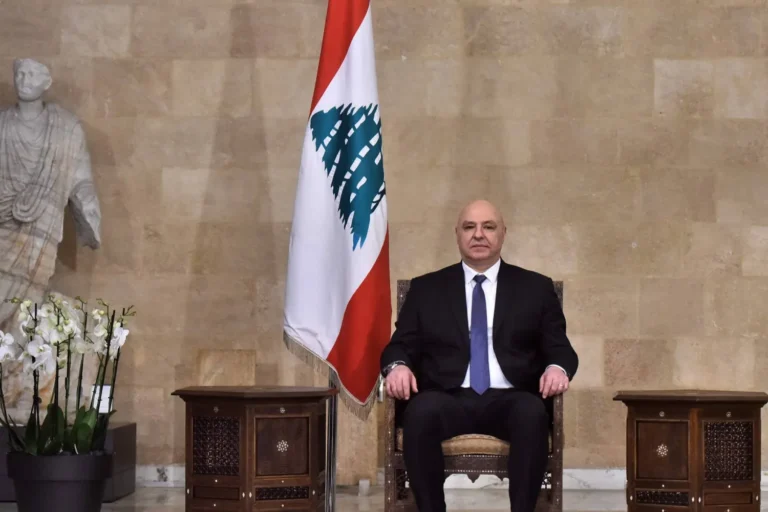
At Baabda Palace, Lebanese President Joseph Aoun received the Syrian minister, where talks focused on ways to enhance bilateral stability. President Aoun also emphasized the importance of continued coordination between Damascus and Beirut to control the land border. He stressed the need for decisive measures to prevent the smuggling of weapons and people, a matter of paramount security priority for both countries.
The Lebanese president expressed his satisfaction with the current level of coordination. He noted that Syrian President Ahmed al-Sharaa had affirmed to him on more than one occasion Damascus’s commitment to supporting Lebanon’s stability. He asserted that “Syria’s role will not be the same as it was in the past.” Aoun also welcomed the formation of the Joint Higher Committee, describing it as a crucial step toward opening a “new chapter” in bilateral relations based on mutual respect and shared interests.
Denying rumors about military presence
This visit comes at a sensitive time, dispelling recent speculation about the possibility of Syrian forces assuming direct security roles within Lebanese territory. Syrian President Ahmed al-Sharaa had previously denied these reports outright, asserting that there was no Syrian troop deployment inside Lebanon.
Al-Shaibani’s visit indicates a clear desire on the part of Damascus to turn the page on the past and redefine its relationship with Beirut on institutional diplomatic foundations. This comes as a departure from armed conflict, reflecting the Syrian leadership’s efforts to reaffirm its policy of “disassociation” from direct interference in Lebanese internal affairs. Nevertheless, Damascus is keeping channels of communication open to serve shared regional security.