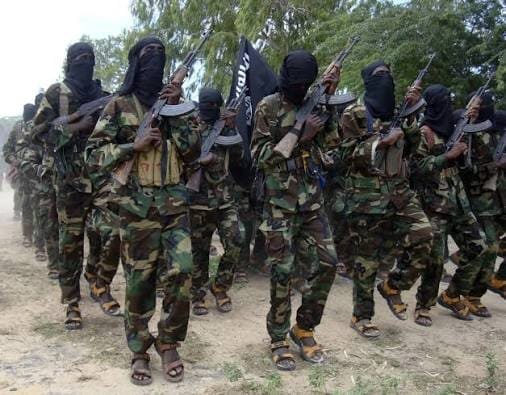
Mogadishu, Somalia – In a dramatic shift reflecting the long-running conflict in Somalia, al-Shabaab, the al-Qaeda affiliate, made significant military gains in 2025, wiping out most of the territorial gains made by the Somali government over the previous two years. According to the International Crisis Group, this setback has brought the war to a forced stalemate, as neither side possesses the capability to deliver a decisive blow.
From “total war” to field retreat
In August 2022, President Hassan Sheikh Mohamud declared a “total war” against al-Shabaab, citing the uprising of the Makawsley clan in central Somalia. At the time, there was excessive optimism in Mogadishu. Officials stated that the group would lose control of all its territory by mid-2024.
However, reality proved these gains to be fragile. The government lacked a long-term strategy to consolidate its control. The army suffered from significant strain due to rapid expansion, as well as logistical and administrative problems related to training and paying new recruits, leading to high desertion rates. Furthermore, there was a shortage of troops capable of holding the liberated territory.
Youth Movement: A “Reconstruction” Strategy and Pragmatism
The movement exploited the government’s preoccupation with political disputes and elections during 2023 and 2024 to regroup. In February 2025, the movement launched a surprise attack on government forces, regaining control of most of the territory it had lost.
Military might alone was not behind this success; the group also demonstrated remarkable adaptability. It undertook significant leadership changes, such as appointing Yusuf Sheikh Issa “Kabakotokadi”—a member of the powerful Abgal clan—as governor of Middle Shabelle. The movement leveraged his clan connections to neutralize support for the government. It also adopted a more pragmatic approach to administering the regions, reducing punitive measures and thus provoking the population less than before. Nevertheless, it remained an extremist group that enforced strict rules.
Somalia’s future: options after the 2026 elections
The International Crisis Group sees the current situation as a stalemate; the government lacks the military strength to achieve a decisive victory, and al-Shabaab lacks the popular support to overthrow the government or seize control of the capital. With the African Union mission nearing its end, concerns are growing about a security vacuum that could be exploited by the militants.
To break the deadlock, the next Somali administration—after the 2026 elections—appears to face a difficult but necessary roadmap. The focus must be on providing high-quality training for soldiers within Somalia and ensuring the continuity of funding and salaries. The institution must also be insulated from the political infighting among the federal states. The greatest challenge is not only military but also political. Mogadishu must resolve its disputes with the federal states and forge a united front against the insurgency, rather than being preoccupied with electoral conflicts that weaken the war effort.
Reports indicate that a military solution alone will not end the war. Therefore, the government must pave the way for political talks with al-Shabaab. Simultaneously, humanitarian organizations should be encouraged to expand their operations in rebel-held areas to alleviate civilian suffering, potentially creating a breach in the seemingly impenetrable wall of conflict. The war in Somalia is currently experiencing a seemingly endless cycle of ebb and flow. Without a comprehensive political vision and profound institutional reforms, the conflict will continue to consume the country’s resources and jeopardize the future of its generations, with the current stalemate on the ground showing no signs of abating.