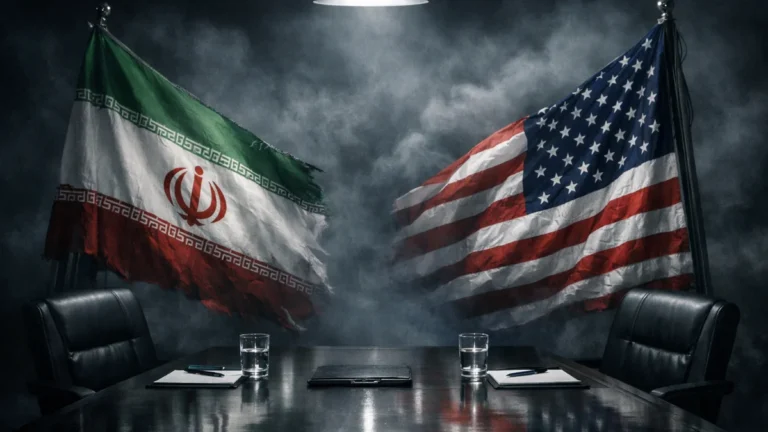
Bürgenstock, Switzerland – In a significant strategic development aimed at reshaping the security landscape in the Middle East, the first round of high-level talks between the United States and Iran concluded Monday morning in the Swiss resort of Bürgenstock. These talks, sponsored and mediated by Qatar and Pakistan, were described in a “positive and constructive atmosphere” according to the joint statement. An ambitious “roadmap” was also agreed upon, aiming to reach a comprehensive final agreement within two months.
Mediation structure and committee tasks
The mediators announced the creation of a “high-level committee” to oversee the political aspects of the negotiation process.
Under the agreement, senior negotiators are committed to providing regular reports to this committee. In addition, specialized working groups will be established to address the nuclear issue and the sanctions issue. A follow-up and dispute resolution team will also be formed.
This organizational structure aims to ensure the effective implementation of the memorandum of understanding that established the framework for this round of negotiations.
Lebanon and the Strait of Hormuz: De-escalation priorities
Two issues emerged as top priorities during this round of talks: the situation in Lebanon, where the two sides agreed to form a “de-escalation working group” comprising representatives from the United States, Iran, and Lebanon, facilitated by mediators. This group aims to ensure adherence to the cessation of hostilities.
Iranian Foreign Minister Abbas Araqchi described this mechanism as the “first real test” of the agreement’s seriousness. Tehran and Washington also established a direct “hotline” to ensure the safe passage of commercial vessels through the Strait of Hormuz. This mechanism aims to prevent any incidents or misunderstandings during the 60-day period stipulated in the memorandum. This reflects the two sides’ desire to secure vital energy shipping lanes.
Intersecting narratives and cautious optimism
رغم الإيجابية التي طبعت البيان المشترك للوسطاء، إلا أن هناك تباينا في السرديات بين الطرفين. فبينما أكد دبلوماسيون أمريكيون استمرارية المحادثات ونجاحها، أشارت تقارير إعلامية إيرانية إلى تعقيدات طرأت على مسار التفاوض المباشر في بعض اللحظات. وفي الوقت نفسه، تواصلت العملية عبر الوسطاء.
On the economic front, Foreign Minister Araqchi announced tangible gains for Tehran, including the lifting of restrictions on oil and petrochemical exports and the release of some frozen assets, confirming the launch of a national reconstruction program.
Meanwhile, the international community awaits the official position of the US administration. The atmosphere of de-escalation was immediately reflected in the markets, with Brent crude falling by more than a dollar per barrel. This indicates market confidence in the possibility of mitigating the risks of escalation in oil shipping lanes.
Prospects for the next phase
Technical talks will resume later this week in Bürgenstock, where mediators (Qatar and Pakistan) are hoping to capitalize on this progress to achieve a breakthrough in the more complex nuclear issue.
Despite the challenges on the ground and in the political arena, the mediators concluded their statement by expressing their deep appreciation for the continued commitment of Washington and Tehran to diplomacy. They also affirmed that efforts will continue at an intensified pace to ensure the region does not slide into renewed conflict. Furthermore, they aim to transform the memorandum of understanding into a sustainable political reality that serves the security and stability of the region.