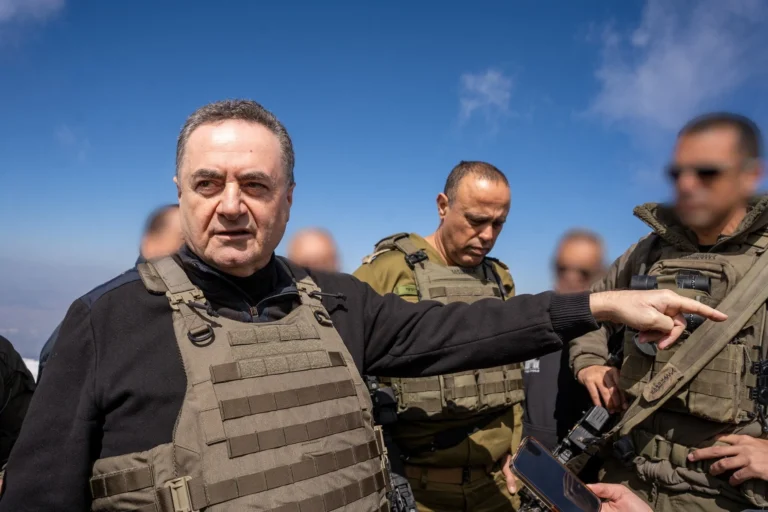
Tel Aviv, Israel – In a highly significant strategic and military move, Israeli Defense Minister Yisrael Katz officially announced on Sunday that Israeli forces had captured the strategic Beaufort Castle (Qalaat al-Shaqif) in southern Lebanon. This comes as the Israeli army continues its recent ground operations deep inside Lebanese territory.
Control of Beaufort Castle: A strategic shift
In an official statement, Katz explained that Israeli forces not only captured the Qala’a Heights but also successfully crossed the Litani River. He emphasized that this area is one of the most strategically important locations that posed a direct threat to the Galilee settlements. He noted that capturing it represents a significant security achievement for fortifying the northern front.
Military escalation: “Crushing the party’s power”
In a clearly escalating tone, the Israeli Defense Minister asserted that Tel Aviv is “determined to crush Hezbollah’s power and complete the mission,” adding that “our enemies will lose their strategic positions one by one.”
These statements come as the pace of Israeli ground operations intensifies. The army command reported Sunday morning that its forces had expanded their offensive beyond the Litani River. Furthermore, the army continues to extend its military operations into additional areas of southern Lebanon.
The importance of the fortress and its field impact
Beaufort Castle, built centuries ago by the Crusaders atop the highest mountain peak in southern Lebanon, is a site of exceptional military and historical importance. It overlooks vast areas and controls vital supply and movement routes.
Its capture by Israeli forces signals a new phase in the conflict. This phase aims to dismantle Hezbollah’s military infrastructure in the rugged mountainous terrain.
This ground incursion was accompanied by an escalation in air and artillery operations targeting Hezbollah’s rear defense lines. Meanwhile, the Israeli army is seeking to consolidate its operational control in southern Lebanon.
As the operations continue, the situation on the ground remains volatile, especially given official Israeli statements affirming their commitment to expanding military operations until their strategic objectives are achieved. Consequently, these developments are creating a new military reality in the region, one that extends beyond the traditional lines of engagement.