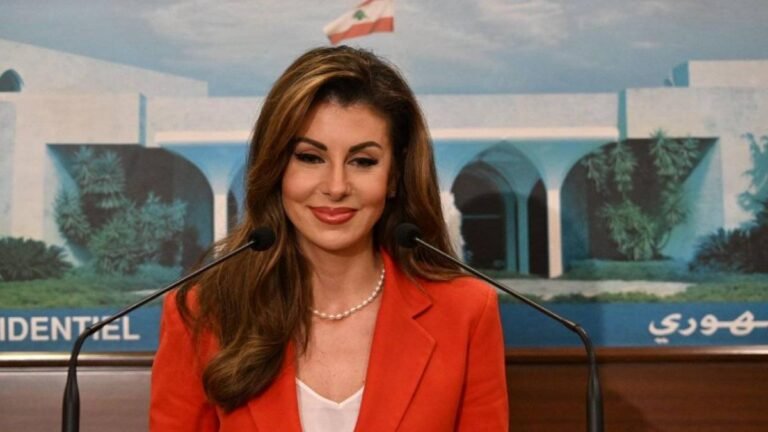
Washington, DC – In a firm statement reflecting the ongoing geopolitical tensions in the Middle East, Morgan Ortagus, former US Ambassador to the United Nations, affirmed that the United States will not allow the Iranian regime to control the Strait of Hormuz, one of the world’s most important international waterways.
Ortagus’s remarks came as a direct response to a recent New York Times report revealing talks between Iran and Oman aimed at imposing service fees on commercial vessels and tankers transiting the strategic strait.
“Surrender to the Iranian regime”
The former ambassador stressed that taking or accepting such a step would amount to “complete surrender to the Iranian regime,” something the US administration categorically rejects.
In her strongly worded remarks, Ortagus clarified that any attempt to restrict freedom of navigation or impose illegal levies under the guise of service fees would be met with a firm response. She emphasized that the international community cannot relinquish its legitimate rights to free and open sea lanes for global trade.
The historical role of the US military
In reviewing her country’s historical role, Ortagus noted that since the end of World War II, the U.S. military has assumed its primary responsibility as “the world’s largest and most powerful military,” remaining the primary guarantor of freedom of navigation and the protection of global supply lines from threats and piracy.
She added that the U.S. military presence in regional and international waters is fundamentally aimed at maintaining the stability of the global economy, which depends heavily on the security of these vital waterways.
The Strait of Hormuz is a red line
Ortagus concluded her remarks by categorically affirming that Washington, in cooperation with its international allies, will not compromise on protecting the Strait of Hormuz, and will not allow Iran to use this strategic waterway as a tool for political or financial blackmail, stressing that freedom of navigation remains a red line that cannot be crossed under any circumstances to ensure the safe and unhindered flow of oil and global trade.