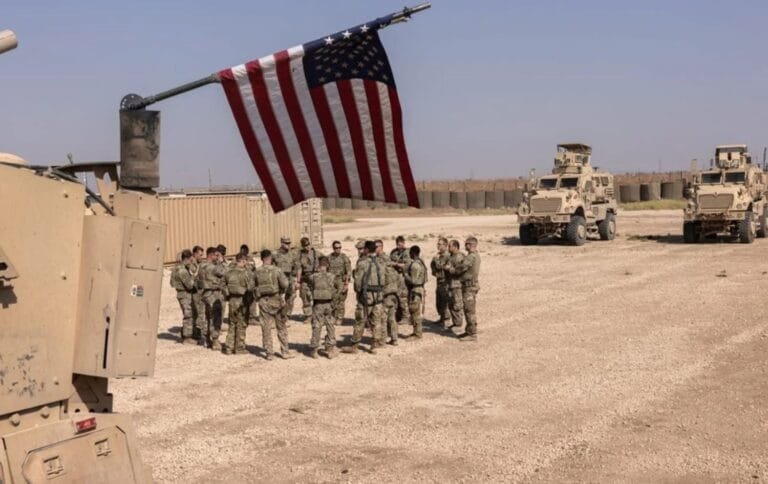
Washington, United States – US Central Command (CENTCOM) has reaffirmed its ongoing efforts to sustain regional security and stability in the Middle East by deepening cooperation and defense coordination with allies, noting that joint action forms the core element in countering escalating security challenges, particularly threats to international shipping lanes.
This firm stance arrives at a time of fast-moving military and political developments across the region, heavily influenced by recent reports that President Donald Trump is seriously considering precision military strikes against strategic Iranian facilities if current diplomatic talks over the nuclear “Declaration of Principles” and enriched uranium stockpiles completely collapse.
Elevating Operational Readiness to Mitigate Escalation Risks
CENTCOM explained, in an official statement, that military and security partnerships directly enhance defensive capabilities and elevate the level of operational and field readiness between US forces and regional partners. This guarantees a rapid response to imminent threats and safeguards shared strategic interests across critical maritime chokepoints.
The command noted that this continuous cooperation spans sensitive intelligence sharing, joint military exercises, and the development of robust deterrence mechanisms. This is deemed crucial as negotiations in Tehran remain loglocked over complex security guarantees, mutual verification, and maritime safety mechanisms within the highly sensitive Strait of Hormuz.
International Efforts to Strengthen Deterrence and Contain Crisis
These statements coincide with heightened tactical readiness driven by recent geopolitical shifts, amid frantic diplomatic mediations led by regional players to prevent a total breakdown of the diplomatic track and avert a full-scale military confrontation that could disrupt global energy markets.
Defense analysts believe the Central Command’s declaration serves as an explicit message of deterrence, signaling that Washington’s military contingencies are tightly aligned with a robust network of regional partners ready to act seamlessly if the diplomatic window officially closes.