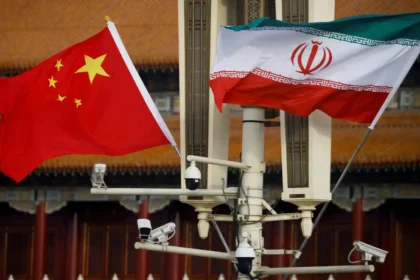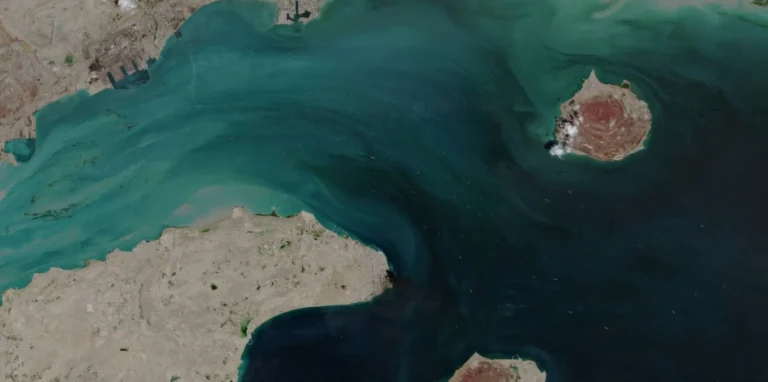
Tehran, Iran – In a sudden reversal that sent the international community into a diplomatic shock, Iran announced on Saturday the re-closure of the Strait of Hormuz to international shipping, in response to what it described as the continued “American blockade.” This dashed hopes for a breakthrough that had emerged after its decision to reopen the vital waterway on Friday.
Return to “military control”
Tehran confirmed it had imposed strict restrictions on the Strait of Hormuz, accusing the United States of violating agreements regarding its reopening. Ebrahim Zolfaghari, spokesman for the Khatam al-Anbiya Central Headquarters of the Armed Forces General Staff, stated that passage through the Strait of Hormuz had officially reverted to its previous state of “complete military control.” Zolfaghari explained that this measure was taken in the context of “defending national sovereignty and protecting the strategic interests” of the Islamic Republic. This came amidst what he described as increasing economic and military pressure from Washington. The military statement emphasized that the strategic strait is now under the “strict management and control” of the Iranian armed forces. This effectively ended the brief 24-hour period of reopening.
Hopes for a “breakthrough Friday” have faded.
This escalation comes just hours after Iranian Foreign Minister Abbas Araqchi announced on Friday that the Strait of Hormuz was fully open to all commercial vessels for the duration of the ceasefire, in line with the de-escalation in Lebanon. US President Donald Trump was quick to welcome the move, calling it a positive step toward ending the tensions. Araqchi had previously indicated that ships would pass through “coordinated routes” designated by Iran’s Ports and Maritime Organization. However, the latest military developments appear to have undermined those diplomatic promises.
Global concern and expectations of escalation
Observers believe that re-closing this vital global energy artery would plunge oil markets back into turmoil and jeopardize the ceasefire agreement. The return of full Iranian military control over the Strait of Hormuz also shifts the focus to Washington to determine its response, especially after Trump’s initial welcome. This could lead to a new round of direct confrontation if the disruption to shipping continues in this waterway, through which approximately one-fifth of the world’s oil consumption passes.