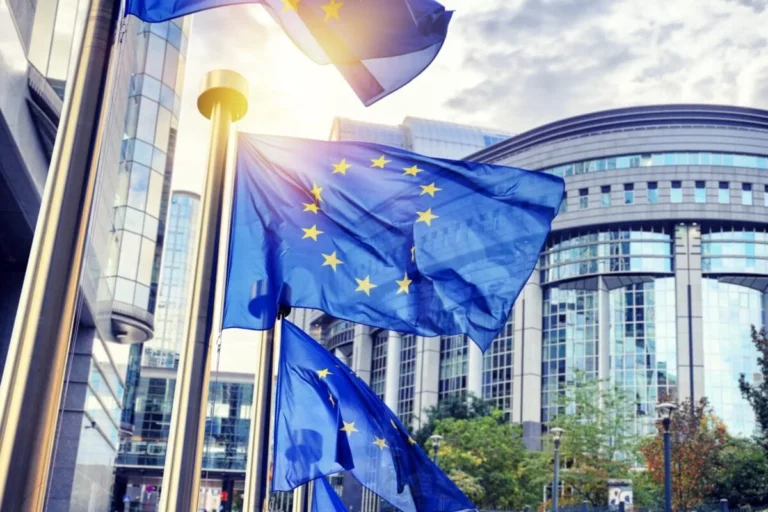
Brussels, Belgium – The Financial Times revealed in a report published on Friday details of intensive European efforts to address the shipping crisis in the Arabian Gulf. The report stated that European leaders intend to discuss a three-phase strategic plan at the upcoming summit, which is dedicated to discussing the escalating tensions in the Strait of Hormuz.
This move comes at a highly sensitive time, as the European Union and its allies seek to establish a diplomatic and military foothold to ensure the flow of energy and global trade through this vital artery. According to the newspaper, “European leaders will work on a three-stage plan” designed to address the crisis in stages, from political solutions to military options on the ground.
Stages of the proposed European plan
According to leaks published by the newspaper, the plan is distributed as follows:
The first phase focuses on launching broad diplomatic and political coordination among European capitals to identify the technical and legal means necessary to ensure maritime security. Additionally, this phase aims to establish a common framework for addressing any potential threats.
The second phase aims to hold in-depth technical discussions on mechanisms for providing logistical support to commercial vessels stranded in the strait. This phase also aims to ensure the safety of crews and protect cargo from any forced disruption.
The third phase, the most sensitive, involves military measures to guarantee freedom of navigation. However, sources emphasized that implementing this phase will only be possible after achieving a lasting peace in the region. This makes it a postponed option, contingent upon the stabilization of the overall political situation.
Despite the ambitious nature of this plan, the Financial Times expressed skepticism about the summit’s outcomes, stating that it did not expect immediate tangible results. This skepticism stemmed from the complexities of the issue, the entanglement of international interests, and the conflicting visions among the major powers involved in the crisis. British Prime Minister Keir Starmer had paved the way for these moves by previously announcing that Britain and France would co-chair an international summit on freedom of navigation this week.
This European initiative is driven by mounting pressure in the wake of the US-imposed blockade on the Strait of Hormuz. It has also prompted a continental effort to protect European economic interests.
In a related development, the efforts were not limited to the organizational aspects of the summit, but also included political and economic pressure. Foreign ministers of the coalition countries working to lift the blockade on the Strait of Hormuz held online talks. During these talks, they discussed drafting potential sanctions against Iran, in an attempt to pressure Tehran to de-escalate tensions and ensure the security of international waterways.
All eyes remain on what the coming days will bring, as there is a race against time to prevent a potential explosion of the situation in one of the world’s most vital waterways.