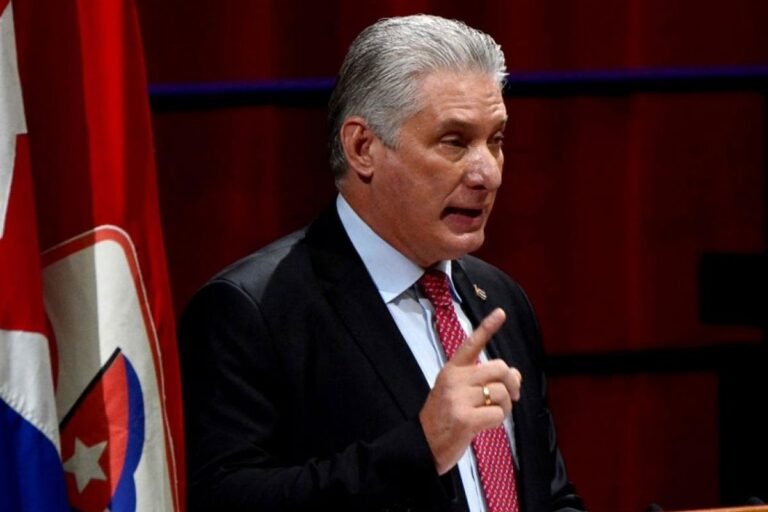
Havana, Cuba – Amid escalating political tensions between Havana and Washington, Cuban President Miguel Díaz-Canel delivered a stern address to the Cuban people, calling for their full readiness to confront any “potential US attack.”
This warning comes at a time of unprecedented strain in bilateral relations, fueled by explicit threats from the US administration and crippling economic sanctions.
Defense of sovereignty and affirmation of victory
In his address, President Díaz-Canel affirmed that his country does not seek armed conflict, stating, “We do not want war, but it is our duty to be prepared to prevent it, and if it becomes inevitable, we must win it.” He emphasized that Cuba possesses the will and the capacity to achieve victory in any confrontation imposed upon it. Nevertheless, he openly acknowledged that the country is currently going through a “difficult period” on both the economic and political fronts.
Canel accused the United States of waging what he called a “multi-dimensional aggressive policy” aimed at destabilizing the Caribbean nation.
He held the US administration fully responsible for the economic hardships faced by its citizens. He indicated that the decades-long economic embargo on the country was the primary cause of the shortages of resources and basic goods.
Washington puts Cuba in the “target”.
The Cuban president’s remarks come in response to a series of threats from the White House.
Earlier this week, US President Donald Trump hinted that Cuba is the “next target” on the US foreign policy agenda after the Iran issue is resolved. Trump stated, “Cuba is a different story. It’s been very badly managed for years, and after Iran, we’ll look at that.” This has raised international concerns about a potential new military or economic escalation.
American pressure was not limited to verbal statements; on January 30, President Trump signed an executive order imposing steep tariffs on all goods from countries that sell or supply Cuba with oil. This move aims to cut off the island’s energy lifeline and isolate it internationally.
White House justifications
For its part, the White House justified these harsh measures as necessary to protect the United States’ “foreign security and political interests.”
The US administration considered its actions a response to what it described as the Cuban regime’s “harmful policies and actions” in the region. Havana, however, categorically rejected this, deeming it a blatant interference in its internal affairs. With this announcement, the region enters a new phase of anticipation. Havana has already begun activating its popular and military emergency plans, asserting that “resistance” is the only way to counter the increasing pressure from its northern neighbor.