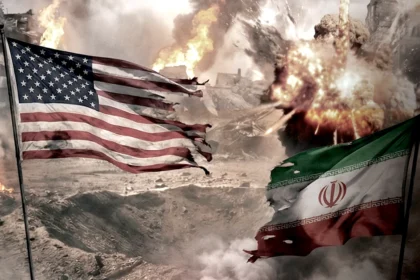
Abu Dhabi, UAE – At a time of escalating geopolitical tensions and accelerating military activity, Dr. Ebtisam Al-Ketbi, founder and president of the Emirates Policy Center, has identified the core of the conflict between the United States and Iran. The intensified US military buildup and the policy of “strangling” Iranian ports have pushed the region to the brink. This raises the fundamental question: can diplomacy bridge the gap between Washington’s desire for containment and Tehran’s ambition for nuclear dominance?
The crux of the dispute: “capability,” not “agreement.”
Through the “X” platform, Al-Kutbi presented a detailed analysis of the balance of power in this complex issue. She emphasized that the nuclear file crisis is the “real point of contention” hindering the achievement of lasting stability.
She also clarified that the obstacle is not the principle of sitting at the negotiating table, but rather the “nature” of the final outcomes. Each side adopts a non-negotiable ceiling.
Washington’s dilemma and Tehran’s ceiling
Al-Kutbi outlined the boundaries of what is acceptable to both parties in a complex equation:
The American position: Washington might accept a civilian nuclear Iran, but only under strict conditions that would completely restrict and closely monitor it, ensuring it is stripped of the ability to rapidly develop nuclear weapons.
Al-Kutbi emphasized that the US administration cannot accept Iran maintaining an advanced enrichment facility or a stockpile of 60% enrichment. Nor can it accept Iran’s right to return to the military path at any time.
Conversely, Tehran might show flexibility in “slowing down” the program, but it strongly resists any formula that leads to “permanent dismantling.” It wants to preserve its key technological assets as a tool for future deterrence or negotiation.
Between freezing and paying for many years
Dr. Al-Ketbi summarized the situation with a profound strategic question: Will the anticipated agreement freeze Iran “at the nuclear threshold,” or will it succeed in pushing it away from it for many years? This temporal and technical difference is what determines the distance between “explosion” and “de-escalation.” From this perspective, the ongoing negotiations remain on a “delicate edge.” On one hand, Washington seeks, through economic and military pressure, to impose a formula for “stepping back from the brink.” On the other hand, Tehran continues to maneuver to maintain its position as a state “on the threshold” of the nuclear club. Therefore, the entire region becomes hostage to the extent to which both sides are willing to make painful concessions at the core of their respective security doctrines.