Amman, Jordan – As events in the region accelerate and the specter of confrontation between major powers looms, talk of war is no longer mere analysis or prediction, but has become a serious scenario on the table for international decision-making. The region stands today on the brink of widespread conflagration. Military interests are intertwined with economic stakes on one hand, and calculations of influence intersect with a highly complex reality on the ground on the other. This is especially true given the escalating military movements and tensions that have persisted for weeks.
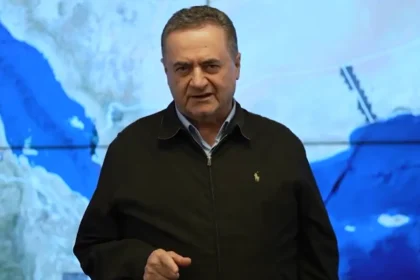
In this context, Jordanian journalist Imad Nassir, in exclusive statements to (Voice of Emirates), offered an in-depth analysis of the potential US-Iranian war. He reviewed the features of the escalation and its political and military dimensions amidst growing indications that a decisive moment is approaching.
He emphasized that what the region is witnessing is not a recent development, but rather the result of historical accumulations and a protracted conflict between Iran on one side, and the United States and Israel on the other. He also pointed out that recent Israeli actions in Gaza, Lebanon, and Syria reflect a state of continuous escalation that could erupt at any moment. This is particularly concerning given the absence of any clear prospect for de-escalation.
Regarding the negotiations, Naseer explained that “even if they continue in Islamabad or return to Muscat, a possibility in the coming period, they are merely an attempt by all conflicting parties to buy time.” He emphasized that “these negotiations have not yielded results in the past, and they do not appear capable of achieving a real breakthrough at present.”
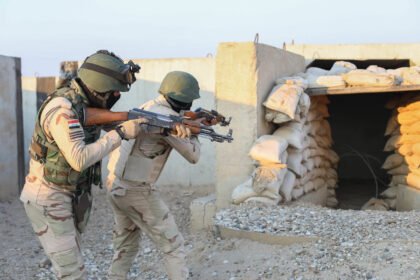
He added that the indicators on the ground reflect a reversal of the de-escalation process, saying, “We are facing a gradual military escalation, as the United States has sent more than 50,000 Marines to the region, and according to American sources, additional reinforcements are on their way, reflecting preparations for more intense scenarios.”
He addressed the critical importance of the Strait of Hormuz, describing it as the “most dangerous flashpoint” in this conflict, and warning that any attempt to close it would lead to a severe global energy crisis. This is especially concerning given that a significant portion of the world’s oil supply depends on this vital waterway. Furthermore, it would have a direct impact on the Gulf states, which rely on it for energy exports and imports of essential goods.
He noted that the region is already experiencing a “fragile truce,” which he suggested could be a prelude to a larger escalation. He indicated that the most likely scenario involves initiating a confrontation by tightening the blockade on the Strait, followed by military action that could include ground operations targeting Iranian coasts and ports. However, this could open the door to a wider conflict that would be difficult to contain quickly.
He concluded by emphasizing that any large-scale military escalation would not remain confined to direct confrontation. Its effects would extend to neighboring countries and the entire region, particularly the Gulf states. This is due to the interconnectedness of economic and geography, making the repercussions of such a potential war a multi-dimensional crisis that could reshape the region for years to come.