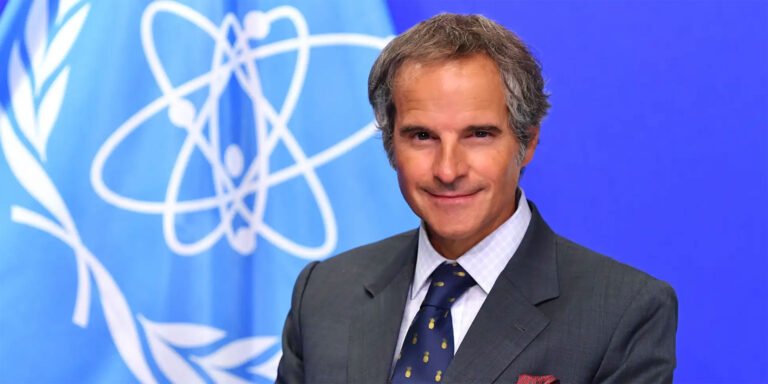
Washington, DC – The Director General of the International Atomic Energy Agency (IAEA), Rafael Grossi, stressed the need for detailed and precise verification procedures for Iran’s nuclear activities to be included in any potential agreement between the United States and Iran. He emphasized that the absence of such verification mechanisms would render any agreement merely a formality, devoid of real value. Speaking to reporters during his visit to Seoul, Grossi explained that Iran possesses a large-scale and ambitious nuclear program. This necessitates the continuous presence of IAEA inspectors on the ground to ensure transparency and compliance. He further stressed that any agreement lacking this verification component would be “illusory” and unworkable. These remarks come as Iran insists its nuclear program is for peaceful purposes. In contrast, the IAEA and several Western countries maintain that Tehran previously had a structured program to develop nuclear weapons until 2003, raising suspicions about the nature of its current activities.
In a related context, the agency estimates that Iran possesses a stockpile of uranium enriched to 60 percent. This level is very close to the 90 percent required to produce a nuclear weapon. This reinforces international concerns about the possibility of an accelerated shift towards military use should a political decision be made to do so. Grossi had previously stated that this stockpile could enable Iran to produce up to ten nuclear bombs if it decided to redirect its program towards military purposes. Therefore, his current emphasis on the necessity of a rigorous monitoring regime as a fundamental component of any future agreement is explained. These statements reflect the complexity surrounding the anticipated negotiations between Washington and Tehran. The challenge lies not only in reaching a political agreement but also in ensuring precise implementation mechanisms that prevent any deviation from the peaceful path of the Iranian nuclear program.