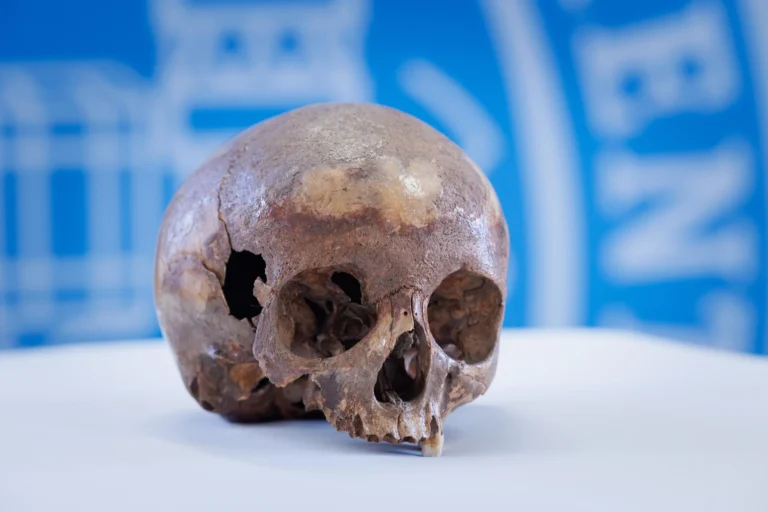
London, United Kingdom – A recent archaeological discovery has revealed new scientific evidence. This evidence sheds light on the development of medical practices in ancient civilizations. Researchers found a child’s skull dating back thousands of years. Furthermore, this skull bears clear traces of medical and surgical interventions. These traces have sparked the interest of archaeologists, historians, and medical experts alike.
On the other hand, this discovery is considered one of the most prominent historical testimonies. It indicates that ancient societies possessed relatively advanced knowledge. Consequently, they were able to deal with injuries and diseases effectively. Additionally, it is believed that some medical practices we consider modern today. May actually be an extension of human experiences dating back thousands of years.
Early Medical Skills in Light of This Archaeological Discovery
In a related context, researchers explained that careful examinations showed clear signs. The child had undergone a medical or surgical procedure during his lifetime. Hence, this archaeological discovery opens the door to new questions. Scientists are wondering about the level of medical knowledge available in that era.
In addition to the above, archaeologists point to diverse treatment practices. These civilizations relied on accumulated experience and careful observation. Previous discoveries have also shown the existence of primitive surgical tools. These were used to treat fractures and serious injuries. In the case of the discovered skull, researchers believe it was a therapeutic attempt to save the child’s life.
A Window into Ancient Societies and the Evolution of Knowledge
On another note, the importance of the discovery is not limited to the medical aspect. It extends to understanding the social and human conditions of those societies. Caring for children and dedicating therapeutic efforts to them reflects the existence of complex social systems. These discoveries also help researchers build a clearer picture of daily life.
In conclusion, medical history experts confirm that the development of medicine was not sudden leaps. Rather, it came through a long accumulation of experiments and knowledge. This archaeological discovery gives researchers an opportunity to study the relationship between beliefs and therapeutic practices. Questions still remain about the exact circumstances of this medical intervention. As analysis continues, scientists hope to gain a deeper understanding of ancient medical progress.