Washington, DC – International officials warned the UN Security Council of the dangers of Yemen being drawn into a wider regional escalation, given the ongoing tensions in the Middle East. They stressed the need for de-escalation, support for the political process, and urgent funding to address the deteriorating humanitarian situation. These warnings came during a Security Council session dedicated to discussing developments in Yemen. Meanwhile, the repercussions of regional tensions continue, despite the ceasefire announced between the United States and Iran after weeks of military confrontations. These confrontations have, in turn, impacted the Yemeni arena through attacks carried out by the Houthi group.
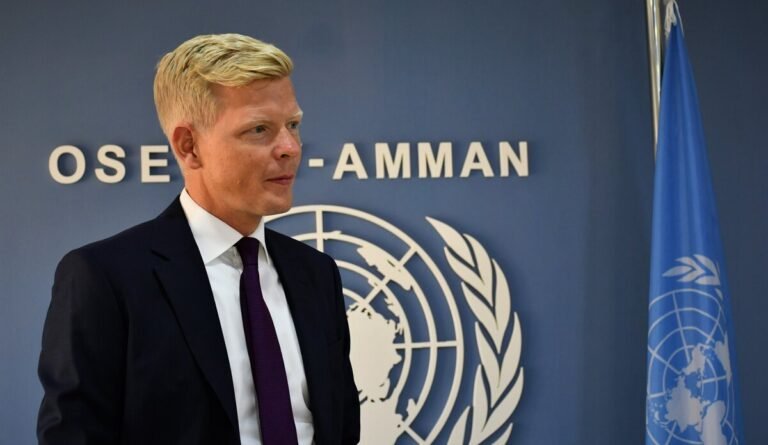
During the briefing, Hans Grundberg, the UN Secretary-General’s Special Envoy to Yemen, stressed that the country could no longer withstand further shocks after years of conflict. He noted the fragility of the economic situation and its vulnerability to the regional crisis, particularly with rising food and fuel prices. Grundberg also pointed to some positive developments, including the adoption of the 2026 budget, the first in seven years, and the resumption of cooperation with the International Monetary Fund. However, he cautioned that these indicators remain limited in the face of significant challenges. Furthermore, he emphasized that the relative calm since the 2022 ceasefire could not be considered stable. He called for accelerating efforts to launch a comprehensive political process that would ensure the country’s stability, insulating it from regional instability.
In the humanitarian context, Edem and Sorno, from the UN Office for the Coordination of Humanitarian Affairs (OCHA), confirmed that the humanitarian crisis in Yemen is worsening. More than 22 million people are in need of assistance, while some 18 million are suffering from food insecurity. She explained that women and children are the most affected, with high rates of malnutrition, particularly among children under five. In addition, pregnant and lactating women face significant health risks. She also noted that humanitarian operations are facing major challenges, including access restrictions and the detention of some UN staff members. These factors are hindering the delivery of aid to those who need it most.
The UN official called for urgent funding for the 2026 Humanitarian Response Plan, which requires $2.16 billion to provide support to millions in need. She also warned of the widening gap between needs and available resources. During the session, Council members stressed the importance of protecting vital maritime routes, particularly in the Red Sea and the Bab al-Mandab Strait. They also emphasized the need to ensure freedom of navigation, given its importance to the global economy. At the conclusion of the discussions, participants affirmed that preventing further escalation in Yemen remains a top priority. Furthermore, political and humanitarian efforts must be supported to achieve sustainable stability.