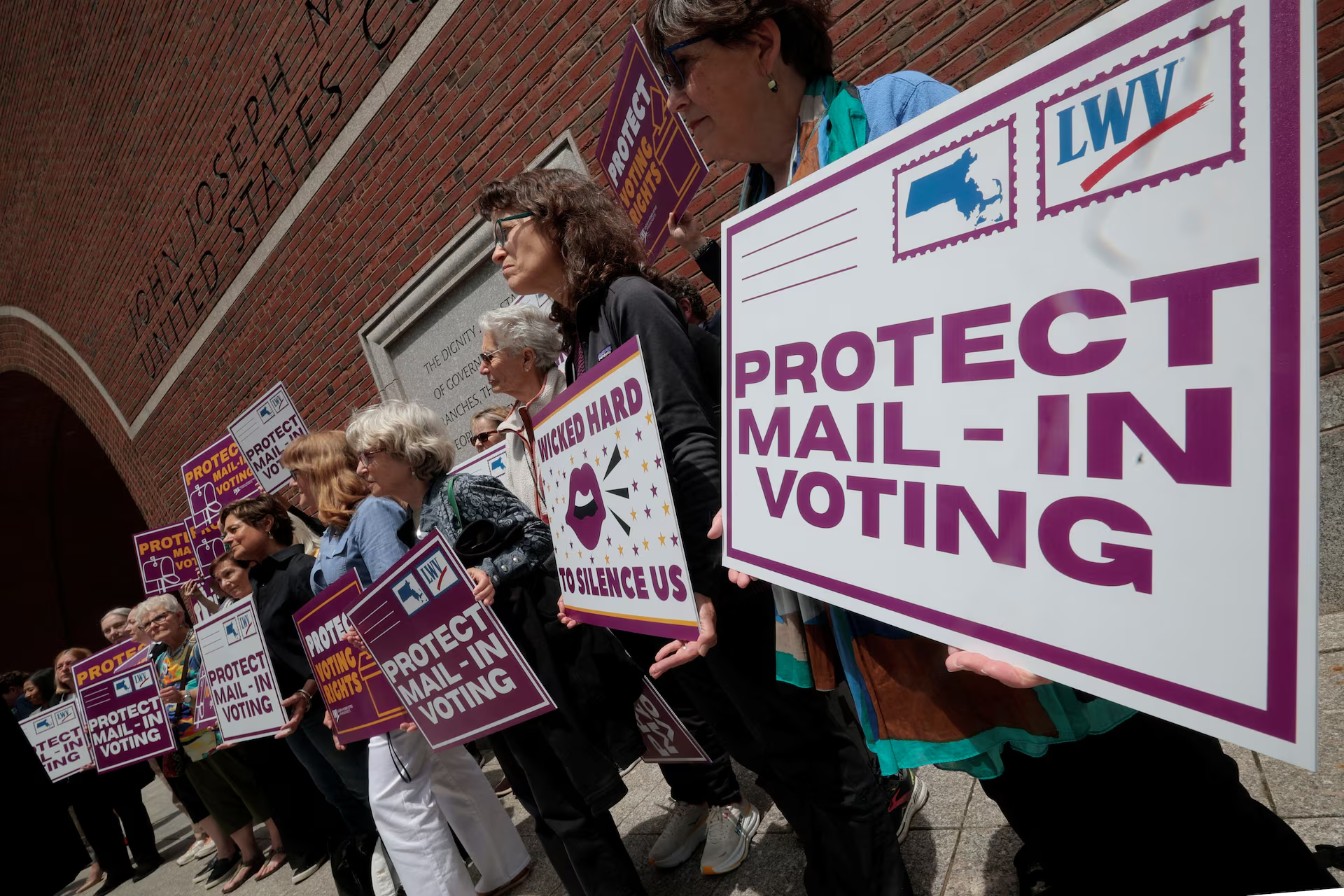
Boston, United States – A US federal judge has blocked an executive order issued by President Donald Trump aimed at tightening regulations for mail-in voting. This judicial ruling prevents the implementation of these measures ahead of the midterm elections scheduled for next November. Moreover, it marks a significant legal victory for the states that challenged the move.
Court Sides with Democratic-Led States
The ruling came in response to a lawsuit filed by a group of Democratic-led states. They argued that the executive order constituted an unlawful interference by the executive branch in the administration of federal elections. Judge Indira Talwani sided with the plaintiffs. She emphasized that the US Constitution clearly defines jurisdictions and prohibits overreach in election management.
In her ruling, the judge stated that the Constitution does not grant the President direct authority to manage elections or regulate their procedures. She deemed the attempt to impose changes on these mechanisms a violation of established constitutional principles. These mechanisms have been managed by states and local governments since the nation’s founding.
Constitutional Critique of Presidential Authority
The court clarified that the President exceeded his constitutional limits by attempting to influence electoral mechanisms under state jurisdiction. In addition, the judge noted that the White House lacks the legal authority to create or compile voter registration lists for states. Nor does the US Postal Service have the legal mandate to issue binding regulations governing mail-in voting at a national level.
This ruling is a setback for Trump, who signed the executive order on March 31 as part of an ongoing campaign to tighten mail-in voting procedures. This issue has remained politically contentious in the US since the 2020 presidential election. There have been deep divisions over balancing election security with voter access.
Political Implications for Congressional Elections
This decision comes at a highly sensitive time, as the US prepares for midterm elections that will determine the balance of power in Congress. The ruling holds significant political and legal importance. It limits federal administrative attempts to impose authority over the electoral process, which is central to the American federal system.
As of now, the White House has not issued an official comment on the ruling. However, the legal battle is expected to continue in the coming period. The US administration seeks to defend federal authority against judicial challenges that reject centralized interference in election management.