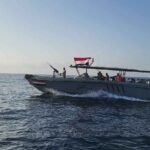

Tehran – Mohsen Rezaei, Secretary-General of Iran’s Supreme National Security Council, stated that the Strait of Hormuz will remain closed unless the United States alters its posture and responds to Tehran’s specific demands. Consequently, these statements affirm Iran’s strategic leverage in linking maritime access to broader political and military resolution steps.
Furthermore, reporting by the semi-official Tasnim news agency indicated that Tehran’s terms require an immediate end to military conflict and the release of frozen Iranian financial assets abroad. As a result, Iranian officials have conveyed additional conditions through diplomatic mediators, using control over the maritime chokepoint to press Washington for policy concessions.
Maritime Crisis and Global Energy Market Strain
On the other hand, the prolonged closure of the Strait of Hormuz creates severe operational uncertainty for global energy importers reliant on Persian Gulf crude and gas transit. Additionally, restricted tanker traffic continues to drive up marine insurance premiums and exacerbate volatility across international energy benchmarks.
Consequently, indirect diplomatic channels remain active as international mediators attempt to negotiate a framework for restoring freedom of navigation. Ultimately, Western powers seek to secure the vital maritime corridor while Tehran maintains its blockade posture to extract strategic guarantees.
Finally, Iran’s explicit conditions mark a critical juncture in the regional conflict narrative. Ultimately, the progress of mediation channels and Washington’s response to Tehran’s demands will dictate whether the Strait of Hormuz reopens to international trade.