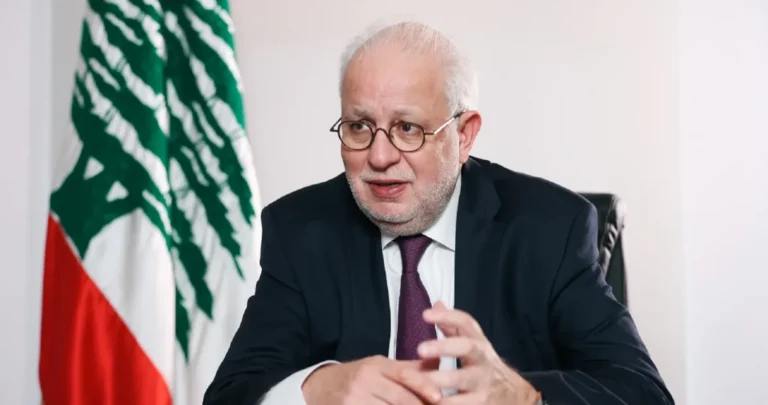
Beirut, Lebanon – Recent statements by the Lebanese Minister of Justice indicate a clear and direct shift towards tightening the state’s grip on sensitive security and judicial files. The Minister affirmed that the fate of the general amnesty draft law will be discussed within a purely judicial and legal framework, far from any political interventions or polarization, while strictly emphasizing the state’s exclusive role in protecting the security of Southern Lebanon.
Shielding the Amnesty Law from Politicization
The Minister clarified that the course of decisions related to the general amnesty law must be based exclusively on approved legal and judicial standards. He categorically stated that political considerations will not be a decisive factor in determining the path or outcomes of this file.
He pointed out that the judicial authority in Lebanon possesses the necessary mechanisms to handle cases related to amnesty in accordance with applicable laws and the requirements of justice, thereby preserving the independence of judicial institutions and separating them from political balances.
Exclusive State Control Over Southern Security
In a firm message regarding the security file, the Justice Minister stressed that the Lebanese state alone is the authorized entity responsible for ensuring the security of citizens in the south of the country. He emphasized that protecting residents must be done exclusively through official state institutions, warning against sliding into what he described as “costly adventures.”
He added that achieving sustainable security stability requires strengthening the role of legitimate institutions and enabling them to fully perform their duties across all Lebanese regions without exception.
Absolute Confidence in the Lebanese Army’s Capabilities
The Minister affirmed the Lebanese Army’s capability and readiness to fully assume its security responsibilities, whether in border areas or in what are known as “experimental zones.” He considered that the justifications previously used to excuse the existence of forces or security roles parallel to the state are no longer valid today.
He concluded that the military institution possesses the necessary capabilities and experience to perfectly carry out its national duties. This solidifies the principle of confining security and military responsibilities to legitimate institutions and supports efforts aimed at consolidating internal stability and extending state sovereignty over all its territories.