Learn about the details of current events in Lebanon, where Israeli attacks are escalating and leaving a devastating impact on the population.
The bombing expanded to the Bekaa Valley
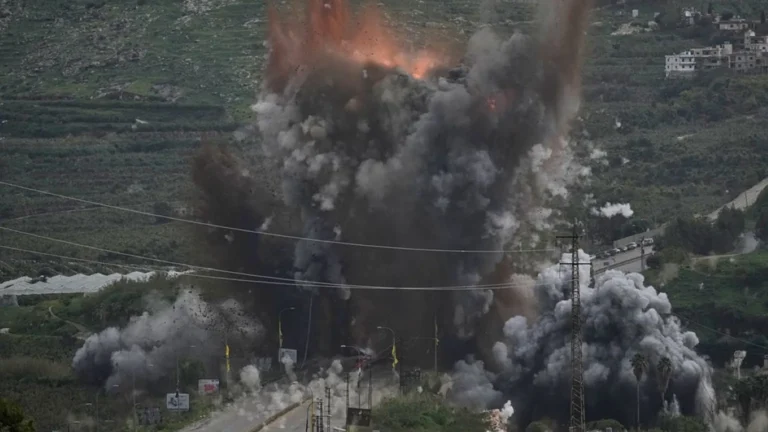
The Israeli army announced in a statement on Friday that it had carried out “attacks on Hezbollah infrastructure in the Bekaa Valley.” It also claimed that this was in response to “repeated violations of the ceasefire.”
Simultaneously, the Lebanese Ministry of Health announced in a preliminary toll that 18 people were killed and 33 wounded in airstrikes targeting villages in the Nabatieh district. These villages were subjected to intense shelling by Israeli aircraft since the early hours of the morning.
Field losses among the Israeli army
On the battlefield, the Israeli army acknowledged the deaths of four of its soldiers, including a battalion commander, and the wounding of 17 others in the fierce fighting in southern Lebanon. This reflects the intensity of the ground battles waged by Israeli forces in their attempt to advance and seize strategic heights.
Inciting statements make the scene more complicated
These developments were met with inflammatory statements from key figures in the Israeli government. National Security Minister Itamar Ben-Gvir called for “burning all of Lebanon,” while Finance Minister Bezalel Smotrich demanded “opening the gates of hell,” hinting at a potential escalation of military operations and a broader range of targets.
A qualitative shift in military operations
This escalation indicates a qualitative shift in Israeli military strategy, which is no longer confined to the southern border regions. It has expanded to include the Bekaa Valley and deeper into Lebanon. This foreshadows further complications in the Lebanese security landscape and increases the humanitarian risks to civilians amidst the continued heavy bombardment of Lebanese villages and cities.