Tehran, Iran – In the most significant diplomatic development in the Middle East in the last decade, Iranian President Masoud Pezeshkian confirmed that the planned agreement between Tehran and Washington is scheduled to be officially signed next Friday in Switzerland.
The Iranian president attributed the country’s resilience during the war and the stability of its market
and political system to the combined efforts of the rulers and conservatives and their wise management of difficult issues.
He also emphasized that the “enemy’s” bet on the collapse of the Iranian state has completely failed.
Details of the diplomatic track
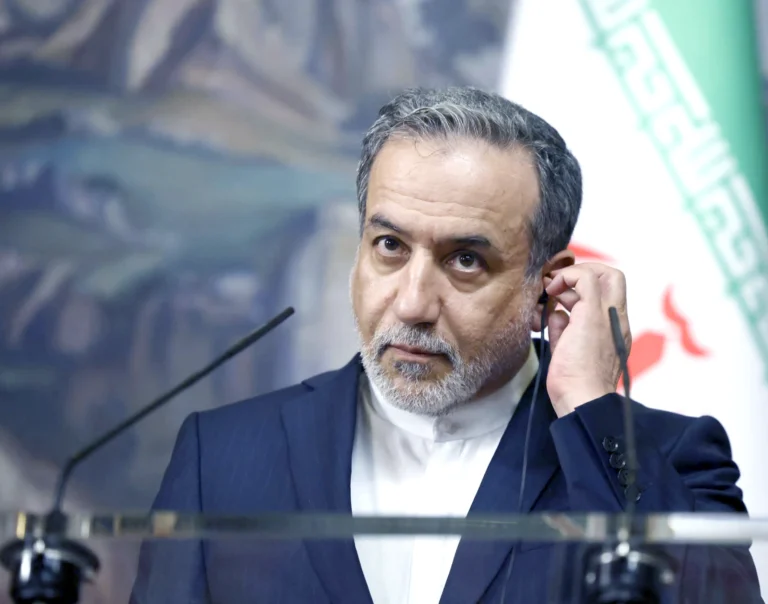
For his part, Iranian Foreign Minister Abbas Araqchi outlined the details of this process,
explaining that a meeting is likely to be held in Switzerland on Friday
between the heads of the Iranian and American negotiating teams to sign the memorandum of understanding.
Araqchi indicated that this signing would signal the start of the first round of actual negotiations.
He emphasized that the Iranian side is planning the process and implementing the agreement’s provisions based
on a “zero-trust” approach, drawing on past experiences with the US administration.
Araqchi explained that the agreement consists of two phases: the first is the memorandum of understanding, the text of which has already been finalized.
The second is a round of negotiations lasting 60 days, which is extendable.
This round will address the thorny issues of the nuclear file and the lifting of economic sanctions imposed on Tehran.
There is a possibility of reaching a comprehensive final agreement.
The minister revealed that some provisions of the memorandum of understanding have already begun to be implemented as of this morning.
Breakthrough in the Strait of Hormuz
In a related development, informed sources told the Iranian news agency Tasnim that the process of reopening
the vital Strait of Hormuz would begin immediately after the memorandum was signed on Friday.
The sources explained that the negotiations were complex, with discussions
on some points continuing until the last minute before an agreement was reached.
Intensive mediation efforts
For his part, Iranian Deputy Foreign Minister, Kazem Gharibabadi, explained that reaching this point took a long time of arduous negotiations.
These negotiations took place with direct support and mediation from Qatar and Pakistan.
Gharibabadi confirmed that a high-level Qatari delegation held marathon talks in Tehran that lasted for about 15 hours yesterday.
These talks culminated in the completion of the text of the memorandum,
which will open a new chapter in the tense relations between Washington and Tehran.
This agreement represents a strategic shift in Iranian policy.
Through it, Tehran seeks to improve its economic situation by lifting sanctions.
In return, Washington aims to calm regional tensions and ensure the flow of energy through the Strait of Hormuz.
As a result, this step places the region before a new phase of anticipated diplomatic calm.