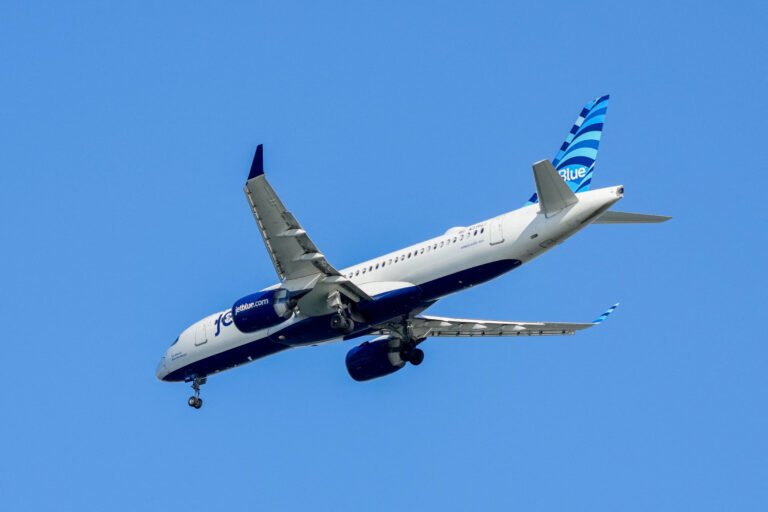
Washington – United States — A commercial US flight was forced to turn back to its airport of departure shortly after takeoff. This followed the receipt of information concerning a potential security threat on board. Consequently, the incident prompted competent aviation authorities to enact swift precautionary measures. These steps aimed to secure the absolute safety of both passengers and crew members.
Immediate Coordination and Safe Landing Amid High Mobilization
American media outlets reported that the aircraft’s captain received a security notification mid-flight. This necessitated immediate coordination with aviation oversight bodies and security agencies. Therefore, the joint command quickly authorized returning to the origin airport as a preventative baseline measure. This was important until the exact nature and credibility of the threat could be verified.
The briefings added that the aircraft landed safely amid intensive security deployment. Police units, bomb disposal experts, and emergency response teams stood by on the tarmac upon its arrival. In addition, passengers were evacuated in an orderly, systematic fashion and transferred to secure zones inside the airport terminal. Meanwhile, specialized teams initiated meticulous inspections of both the fuselage and the luggage compartments.
Federal Inquiries Launched and Praises Extended to Fleet Readiness
Relevant authorities emphasized that passenger safety remained the paramount priority during the handling of the incident. They pointed out that the implemented procedures strictly aligned with established protocols for managing potential security anomalies. This was the case even when the credibility of the incoming reports remains unverified. As a result, the incident caused cascading delays for several scheduled flights, impacting overall airport operations for a limited duration. In response, airlines worked to reschedule routes and extend alternative travel arrangements to the affected passengers.
Concurrently, federal regulatory authorities have opened a comprehensive investigation to uncover the underlying circumstances of the incident and isolate the entities responsible for the threat. This comes against the backdrop of stringent security frameworks governing American airports for years to neutralize any risks threatening air transport safety. Nevertheless, aviation sector analysts postulate that such incidents, despite their rarity, reflect an exceptionally high state of readiness across commercial carriers and state regulators. Thus, they demonstrate that any prospective threat is managed with maximum caution to preserve consumer confidence in global air travel.