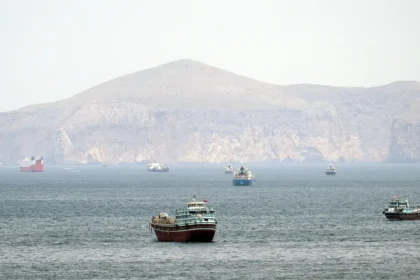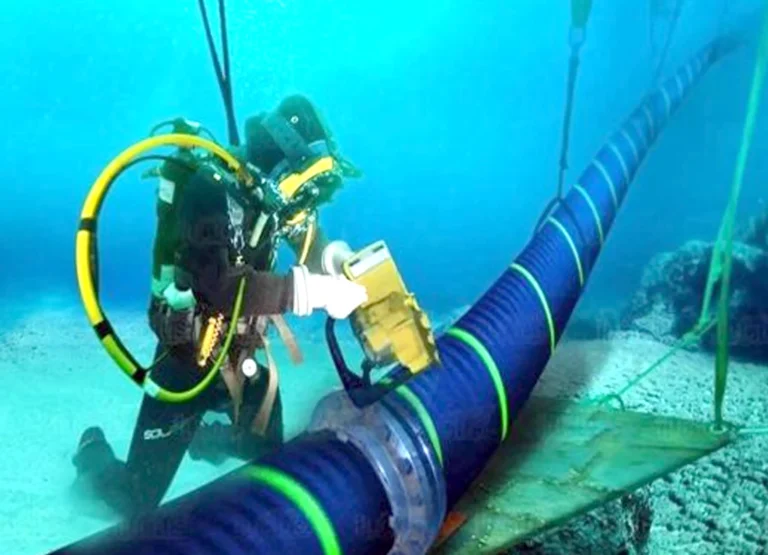
Tehran, Iran – Iran’s Revolutionary Guard announced that fiber optic cables crossing the Strait of Hormuz may be subject to a permit system in the future. This comes as part of what it described as tightening control over the strategic waterway.
In a post on social media, the Revolutionary Guard explained that Iran,
“based on its sovereignty over the seabed and subsoil in its territorial waters,
can impose a permit system on all fiber optic cables passing through the strait.”
Linking sovereignty and maritime communications
This announcement comes amid a continuing escalation in Iranian rhetoric regarding maritime routes,
particularly the Strait of Hormuz, one of the world’s most important energy and communications arteries.
A significant portion of international oil traffic and data passes through it.
The statement from the Iranian Revolutionary Guard Corps indicated
that these measures are part of what Tehran considers “strengthening maritime sovereignty.”
This includes control over underwater infrastructure within its territorial waters.
Concerns about the impact on the global internet
The Iranian Revolutionary Guard talk of subjecting internet cables to a permitting system is raising
increasing concerns among telecommunications companies and international bodies.
This is because a large portion of global data traffic relies on undersea cables that pass through the Strait of Hormuz.
Experts believe that any restrictions on this infrastructure could lead to potential disruptions in data flows,
including cross-continental financial and commercial communications.
Tensions escalate in the Gulf
This development comes amid escalating regional tensions related to maritime security in the Gulf.
It unfolds against a backdrop of mutual accusations between Iran
and Western countries regarding freedom of navigation and the protection of vital infrastructure.
Observers emphasize that continued escalation in this matter could open
the door to further tensions in one of the world’s most strategically sensitive waterways,
impacting both energy and international communications.