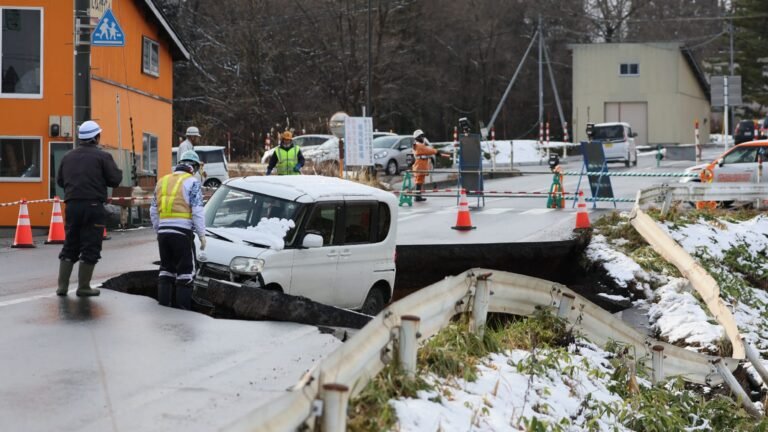
Tokyo, Japan – A strong earthquake measuring 5.9 on the Richter scale struck parts of the southern islands of Kagoshima Prefecture in southern Japan on Wednesday morning, causing alarm among local residents. However, the quake did not result in any significant casualties or damage in the affected areas.
Determining the epicenter of the earthquake and ruling out tsunami risks
The Japan Meteorological Agency (JMA) stated in an official statement that the earthquake was accurately recorded by the national seismic monitoring network. It also indicated that the epicenter was located off the coast of the vital island of Yoron.
The agency’s technical report explained that the earthquake occurred at an average depth of approximately 50 kilometers below the sea surface. This significantly reduced the intensity of the aftershocks on land.
For their part, the relevant authorities were quick to reassure the public. The Japan Times quoted official sources on Wednesday confirming that there was no threat or danger of a devastating tsunami in coastal areas as a result of this tectonic activity. This helped to calm public fears.
Local police reports confirm the safety of residents and facilities.
In the same context, security sources in the local police in Yoron, the area closest to the epicenter, confirmed that no reports or complaints of damage to infrastructure, collapses of residential buildings, or injuries among residents have been received so far. Safety patrols and enforcement agencies continue to inspect streets and vital facilities to ensure their structural integrity.
Official warnings of strong aftershocks to come
Despite the absence of initial damage, Japanese authorities urged extreme caution. During a press conference held by the Japan Meteorological Agency on Wednesday afternoon, agency spokespeople stressed that residents in the affected area and surrounding regions should remain vigilant and prepared for the possibility of further earthquakes and strong aftershocks.
The agency explained that the period of vigilance and active monitoring could extend for up to a full week. It also emphasized that the risk is particularly high during the next two to three days, as geological fault activity increases following major tremors. This necessitates adherence to civil defense instructions and established safety procedures in the country.