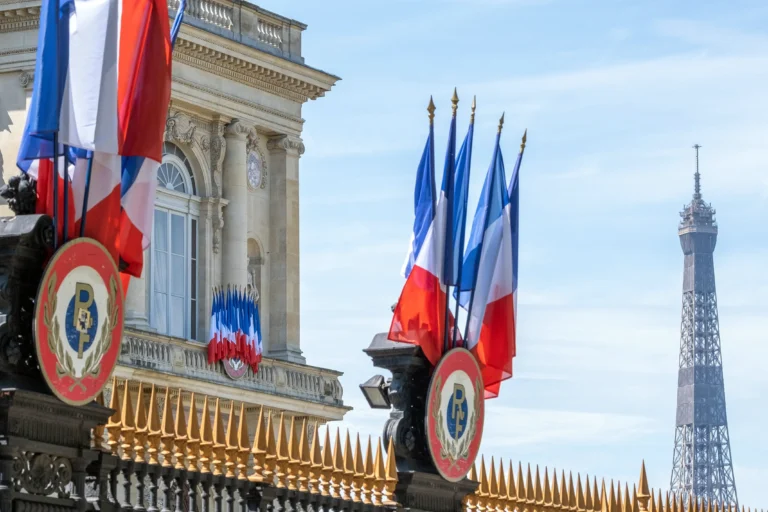
Paris – The French Foreign Ministry has confirmed that Paris does not support any military approach regarding the opening of the Strait of Hormuz or securing navigation through force. Paris emphasized that maintaining international maritime security must remain within diplomatic tracks and political solutions, warning that any military escalation could exacerbate the already deteriorating situation in the region and lead to a confrontation with unpredictable consequences.
In its statement, the French Foreign Ministry explained that the Strait of Hormuz represents an untouchable vital artery for global trade and international energy supplies. It noted that any armed confrontation in this sensitive area would cast a heavy shadow over the global economy and lead to sharp disruptions in oil markets—a scenario France seeks to avoid by intensifying communication channels with active regional and international powers.
Supporting De-escalation and Preventing a Broader Conflict
Paris added that it is continuing its intensive contacts with international partners to support de-escalation efforts and prevent the region from sliding into a large-scale conflict. France underscored the importance of respecting international law and the United Nations Convention on the Law of the Sea, which guarantees the freedom of maritime navigation for all nations. French diplomacy believes the solution lies in reducing hostile mutual rhetoric and replacing it with dialogue tables that ensure everyone’s interests without resorting to force.
The Foreign Ministry stressed that France, as a permanent member of the Security Council, is committed to its responsibilities toward preserving international peace and security, considering the security of the Gulf an integral part of global stability. Therefore, the French call is based on the necessity of self-restraint and avoiding any provocative movements in waterways that could be misinterpreted and trigger a war.
International Concerns Over the Militarization of Waterways
These French statements come at a time of increasing international concern over the “militarization” of the Strait of Hormuz, with escalating military movements and mutual statements between major and regional powers. Observers believe the French position represents a rational voice seeking a “third way” away from direct clash, especially since the Strait of Hormuz is a primary transit point for a massive percentage of global oil and gas exports relied upon by major factories and economies.
In conclusion, the French position reaffirms Paris’s role as a diplomatic mediator seeking to defuse crises. For France, freedom of navigation remains a legal principle that should not be defended through the muzzles of cannons, but through the activation of international laws and fostering trust among the countries overlooking this strategic corridor, ensuring the safe and secure flow of global trade.