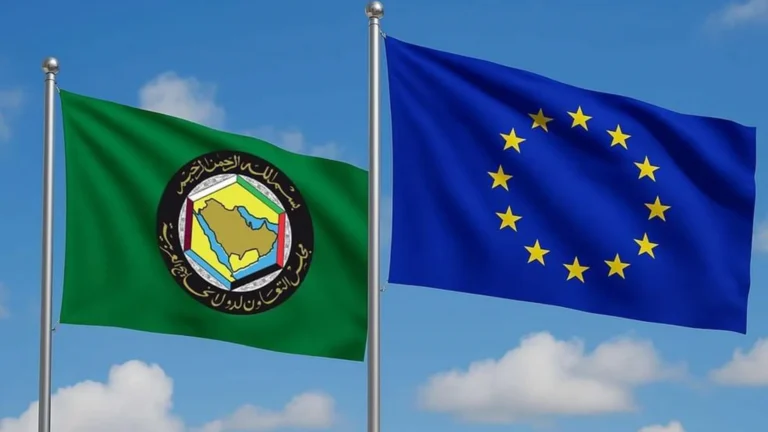
Brussels – European Union foreign ministers, during their regular meeting in the Belgian capital, Brussels, emphasized the strategic importance of strengthening relations with the Gulf Cooperation Council (GCC) states. This direction comes amidst escalating security and political challenges in the Middle East, as the European Commission seeks to build deeper partnerships to counter shared threats and ensure the stability of global energy and trade flows through vital waterways.
Kaja Kallas, the EU High Representative for Foreign Affairs and Security Policy, stated that the meeting focused intensely on formulating a unified vision with Gulf partners toward current crises. She explained that the EU views the Gulf states as a fundamental pillar for regional stability, confirming that the coming period will see intensified diplomatic meetings to coordinate positions on hot-button issues in the region.
Deteriorating Security in Hormuz and Enhancing Operation “Aspides”
Kallas expressed the EU’s grave concern over the deteriorating situation in the Strait of Hormuz following recent attacks, noting that these developments have directly impacted international trade routes. She announced that ministers discussed ways to strengthen the European naval operation “Aspides,” dedicated to protecting commercial vessels, asserting the EU’s intent to leverage its long experience with the Iranian file to guarantee freedom of navigation and prevent further escalation threatening the global economy.
The High Representative clarified that the Iranian list of entities Tehran considers “threats to navigation” has expanded—a move the EU views as a provocation requiring a coordinated diplomatic and security response. She stressed that protecting waterways is not just a regional issue but an international responsibility that the EU places at the top of its priorities within its strategic cooperation with regional states.
Sanctions in Gaza and Conditional Support for Syria’s Political Transition
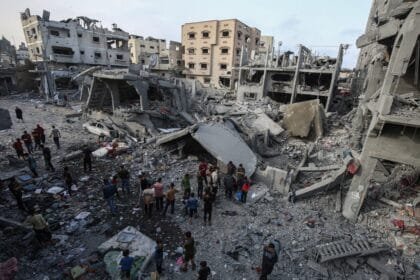
Regarding the Gaza Strip, Kallas described the situation as “extremely dangerous” due to stalled talks. She announced the approval of a sanctions list targeting extremist settlers involved in violence, alongside measures against Hamas, emphasizing that “violence must have consequences.” On the Syrian file, she revealed that ministers agreed to reactivate the cooperation agreement with Damascus as a signal for resuming dialogue, while linking any reconstruction support to tangible and real progress in a comprehensive political transition.
In conclusion, the European meeting reflects Brussels’ desire to play a more active role in Middle East issues through the gateway of Gulf cooperation. While sanctions remain a tool for pressure regarding violence, political dialogue remains the EU’s preferred path for dealing with Syria and Iran, in an attempt to create a delicate balance that preserves European interests and secures international navigation in a highly volatile region.