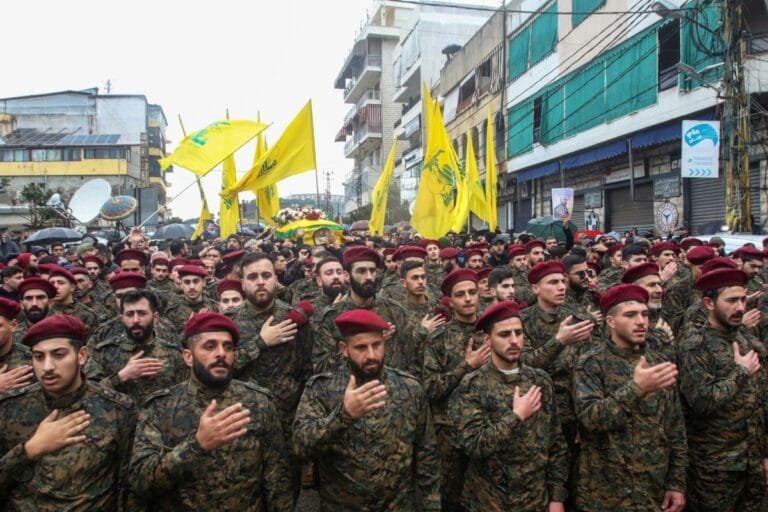
London – Agencies – The British magazine “The Economist” stated that the level of resilience shown by Hezbollah during recent confrontations has come as a surprise to Israeli security circles. The magazine explained that military leadership in Tel Aviv expected a faster decline in the group’s field capabilities under the pressure of intensive operations. Furthermore, developments on the ground showed organizational capacity exceeding initial intelligence estimates. Accordingly, Hezbollah’s field resilience represents a direct challenge to the declared military objectives on the northern front. In this regard, analysts have begun re-evaluating the balance of power amidst ongoing mutual shelling.
The Group’s Ability to Maintain Operational Pace Despite Escalation
The Economist” indicated that developments on the ground revealed the group’s ability to maintain a steady operational pace despite continuous escalation. Obviously, this consistency has raised fundamental questions within Israel regarding the effectiveness of the military strategy currently followed. As a result, concern prevails in military circles about the confrontation turning into a long-term war of attrition that is not in the interest of internal stability. In addition, Hezbollah’s field resilience contributes to complicating the deterrence calculations that Israel has tried to impose since the beginning of the crisis. However, Israeli forces continue their operations to try and break this defensive and offensive pace.
Complexities of the Regional Scene and Overlapping Military and Political Calculations
The report emphasized that the current resilience reflects the complexities of the regional scene and the unprecedented overlap of military and political calculations. Certainly, the expansion of tension across multiple arenas has made it difficult to settle the battle on one front without being affected by another. Accordingly, experts believe that Hezbollah’s field resilience is linked to a vast network of logistical support and regional alliances that provide it with continuity. On the other hand, these complexities impose additional pressure on decision-makers in Israel to balance military escalation with international diplomatic pressures. In the same context, this overlap contributes to prolonging the conflict without a clear horizon for a solution.
Long-term Challenges and Lack of Near-term Decisiveness on the Northern Front
The Economist” concluded its analysis by emphasizing that the continuation of confrontations in this manner will impose long-term security and economic challenges on all parties. Obviously, the absence of a clear military resolution in the near term enhances the chances of the state of tension remaining for extended periods. As a result, the concerned parties may be forced to reconsider their tools for managing the conflict away from traditional military solutions. In addition, Hezbollah’s field resilience remains the most prominent variable preventing a quick and decisive victory for any party. Ultimately, the stability of the northern borders will remain dependent on major political understandings that may mature under the pressure of field attrition.