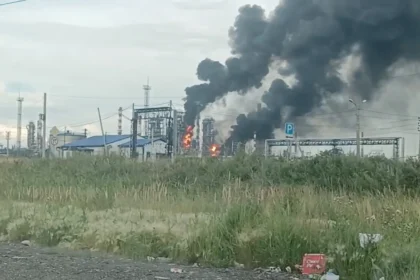
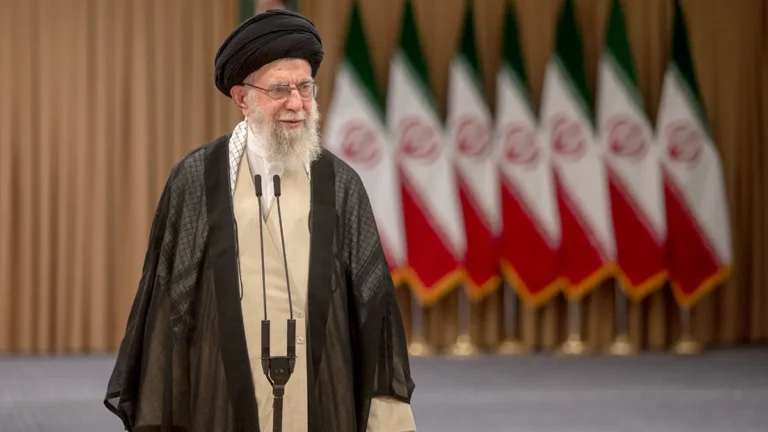
Dubai/Tehran – Iranian state media announced early Sunday the death of Supreme Leader Ali Khamenei, hours after a series of attacks. Khamenei was one of the most influential figures in Iranian politics. Washington and Tel Aviv said the attacks were a joint operation targeting “command centers and military installations” inside Iran.
The Associated Press quoted Iranian state television and the official IRNA news agency confirming the death of Khamenei (86 years old), without providing further details about the circumstances or location of his death. It should be noted that recent news of Ali Khamenei’s death has been linked to major changes in Iran.
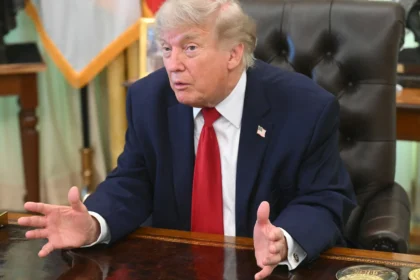
In contrast, US President Donald Trump stated that Khamenei was “killed” in a joint US-Israeli operation targeting Iran. Trump also asserted that this presented Iranians with an “opportunity” to change their political reality. Meanwhile, Western reports indicated that the strikes targeted sites linked to leadership, security, and defense. Furthermore, discussions about a potential successor to Ali Khamenei have intensified among Iranians.
The Axios news platform reported that the Iranian government declared 40 days of national mourning following what it described as the “martyrdom” of the Supreme Leader. This decision signals that the country has entered a highly sensitive political and security phase. The death of Ali Khamenei marked a significant turning point in events, coinciding with ongoing clashes.
Reciprocal blows and regional turmoil
According to the Associated Press, the strikes targeted sites that U.S. Central Command said were aimed at “dismantling the regime’s security apparatus.” Meanwhile, Iran launched missiles and drones toward Israel and U.S. bases in the region. An Iranian diplomat also informed the Security Council that hundreds of civilians had been killed and wounded in the attacks.
Leadership vacuum and questions of succession
The assassination of Khamenei—who held ultimate authority on major issues within Iran—represents a seismic event that could open the door to a power struggle within the centers of power, particularly between religious, security, and military institutions. The appointment of Ali Khamenei’s successor is known to have a significant impact on Iran’s future, and attention is expected to turn to the constitutional mechanisms for selecting a new Supreme Leader. Meanwhile, strikes and retaliations continue, and fears of a wider regional conflict are growing.