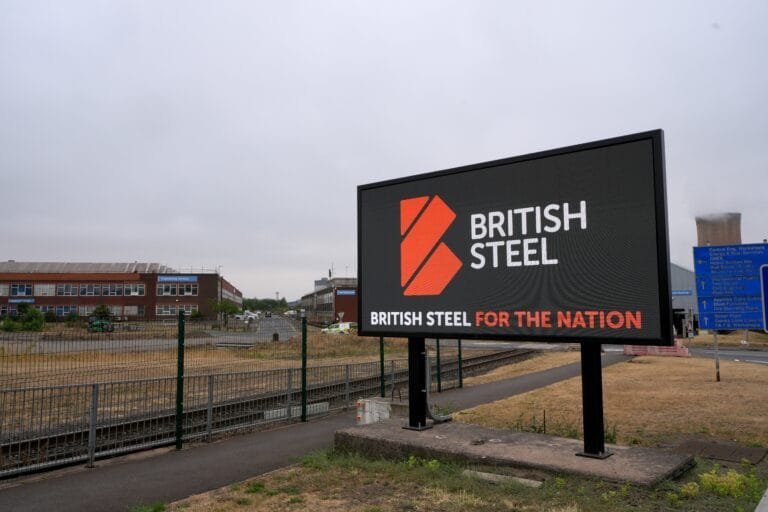
London, United Kingdom – China’s Jingye Group has demanded comprehensive financial compensation from the British government, threatening to take legal action following the enactment of legislation that returned “British Steel” to public ownership. In response, London emphasized that this extraordinary measure was both necessary and unavoidable to protect national economic security and preserve the domestic steel industry from collapse.
Jingye Vows to Defend Its Legal Interests
The Chinese conglomerate—a prominent private industrial entity operating in steel manufacturing, chemicals, real estate, and tourism—affirmed in an official statement that it would defend its legitimate rights and interests through all available legal avenues. The group expressed strong protest against the UK government’s decision to nationalize the company, which Jingye had acquired in 2020 as part of a major bailout plan to rescue it from bankruptcy, viewing the British move as an unjustified reversal on investment commitments.
The Strategic Dimensions of the UK Nationalization Decision
The decisive British nationalization order came after the government effectively assumed control of the company’s management in April 2025, following the Chinese group’s declaration that operating the Scunthorpe plant was no longer economically viable. This legislation marks the return of the company to state ownership for the first time since its privatization in 1988. London regards the preservation of the Scunthorpe plant—the country’s last remaining facility capable of producing steel from raw materials—as a paramount strategic necessity to ensure the continuity of vital and defense-related industries within the United Kingdom.
For his part, British Prime Minister Keir Starmer emphasized that the nationalization guarantees a stable future for the steel industry, safeguards thousands of specialized jobs, and protects the nation’s core industrial capabilities.
Official Discontent and Resentment in Beijing: The Chinese Ministry of Commerce expressed deep dissatisfaction with the British move, characterizing it as a “forced seizure” of British Steel under the pretext of national security. The ministry warned of the repercussions of this measure on foreign investor confidence, opening the door to a new chapter of economic and diplomatic tensions between Beijing and London regarding foreign investments in vital strategic sectors.