Cairo, Egypt – The question, “Are modern Egyptians descendants of the pharaohs?” is generating considerable interest among researchers and history enthusiasts,
especially given the significant advancements in genetics and DNA,
which have allowed scientists to trace the genetic origins of ancient peoples and compare them to the current population.
Most scientific studies indicate that modern Egyptians retain
a substantial portion of the genetic heritage of ancient Egyptians,
despite the numerous migrations, invasions, and population mixing
that have left their mark on the genetic makeup of the country over thousands of years.
What did the DNA analysis reveal?
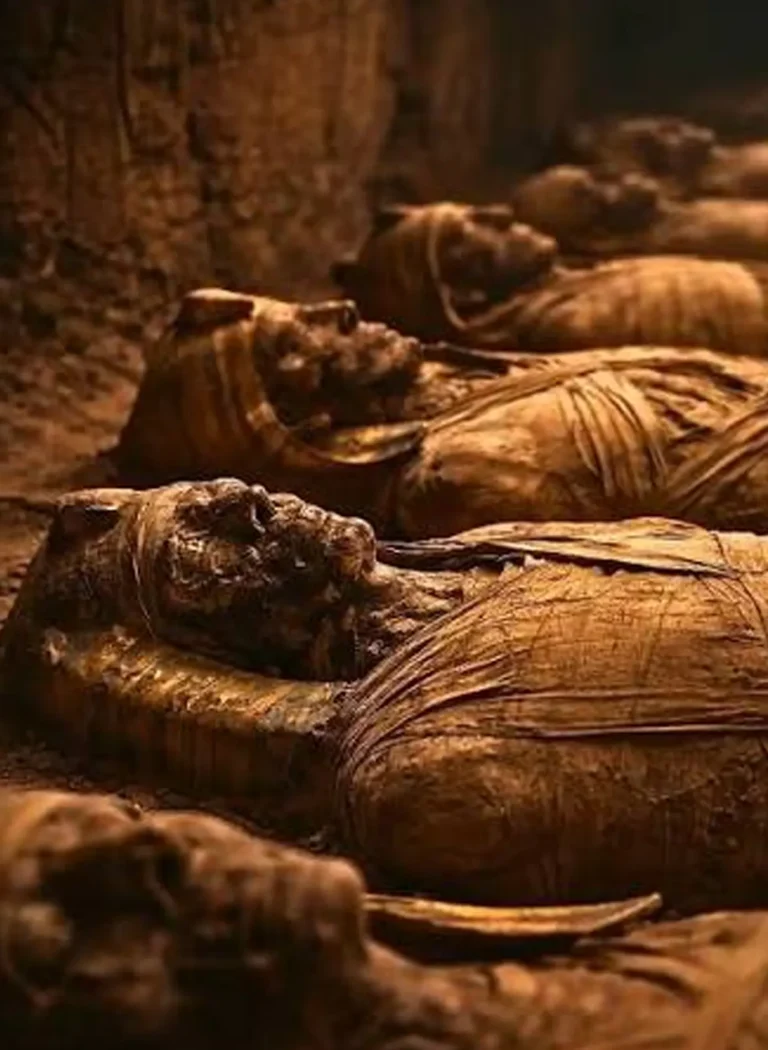
In recent years, scientists have successfully extracted and analyzed DNA
from a number of Egyptian mummies dating back to different periods of Pharaonic civilization.
The results showed that the inhabitants of ancient Egypt possessed a distinctive genetic makeup,
ith strong links to the peoples of the ancient Near East and the Eastern Mediterranean.
This reflects Egypt’s nature as a cultural and commercial center open to the ancient world.
Genetic research indicates that modern Egyptians do not represent a break from their ancient ancestors,
but rather carry a significant portion of their genetic heritage passed down through thousands of years.
Conversely, studies confirm that Egypt’s population structure has undergone natural changes
as a result of successive civilizations, migrations, trade, and intermarriage—a phenomenon experienced by most peoples worldwide.
Identity is not just about genes
Throughout its history, Egypt has been ruled by numerous civilizations and empires, from the Libyans and Nubians to the Persians, Greeks, and Romans, culminating in the Arab conquest, the Islamic era, and later the Ottoman rule.
Despite this, geneticists believe that these periods added new elements to the population composition but did not erase the genetic foundation traced back to the ancient inhabitants of the Nile Valley.
Researchers emphasize that belonging to ancient Egyptian civilization is not based solely on DNA, but also encompasses history, language, culture, geography, and continuous settlement in the Nile Valley over thousands of years.
Therefore, discussing Egyptians as a continuation of Pharaonic civilization is not solely a genetic factor, but also reflects the continuous presence of Egyptian society on its land since the dawn of history.
Ongoing scientific debate
Despite the agreement on genetic continuity between ancient and modern Egyptians,
scientists disagree on the extent of the impact of different waves of migration throughout history,
due to the limited archaeological samples that have been analyzed so far.
Specialists also emphasize that any new study will likely provide more precise details
as DNA analysis techniques advance and new mummies are discovered.
Available scientific evidence indicates that modern Egyptians are, to varying degrees,
a genetic extension of the ancient Egyptian population, including the pharaohs,
with natural genetic additions resulting from thousands of years of interaction with other peoples.
Thus, the picture painted by science is not one of complete discontinuity
or absolute genetic purity, but rather one of long-standing population continuity,
meaning that modern Egyptians carry a significant part of the legacy of
their ancestors who built one of the greatest civilizations in human history.