Washington, DC – The United States’ decision to freeze Japanese assets in the summer of 1941 is considered one of the most significant economic decisions that altered the course of history. Its impact extended far beyond trade relations between the two countries, becoming a catalyst that pushed Japan toward military confrontation, ultimately leading to the United States’ entry into World War II following the attack on Pearl Harbor.
Historians argue that the economic sanctions imposed by Washington on Tokyo were among the most effective tools of pressure in the 20th century, plunging Japan into an economic and strategic crisis that forced it to make fateful choices.
Tensions escalate between Washington and Tokyo
In the late 1930s, Japan expanded its military presence in China and continued its expansion into Southeast Asia,
raising concerns among the United States, Britain, and their allies about Japan’s growing influence in the Asia-Pacific region.
As Japanese military operations continued, Washington began imposing increasing restrictions
on the export of strategic materials to Tokyo in an attempt to pressure it to halt its military expansion.
On July 26, 1941, US President Franklin Roosevelt issued an executive order freezing all Japanese assets
in the United States, effectively halting financial transactions between the two countries.
This was followed by an embargo on oil and fuel exports to Japan.
Britain and the Netherlands joined in similar measures, further intensifying the economic pressure on Tokyo.
Oil: The Turning Point
Japan was heavily reliant on oil imports from the United States, so the embargo posed a direct threat to its ability to operate its navy, military, and defense industries.
The Japanese leadership realized that its oil reserves would only last a limited time, prompting it to seek new energy sources in Southeast Asia. From its perspective, this required neutralizing American power in the Pacific.
Although negotiations between Washington and Tokyo continued throughout the final months of 1941,
they failed to achieve any real breakthrough, as both sides remained entrenched in their positions.
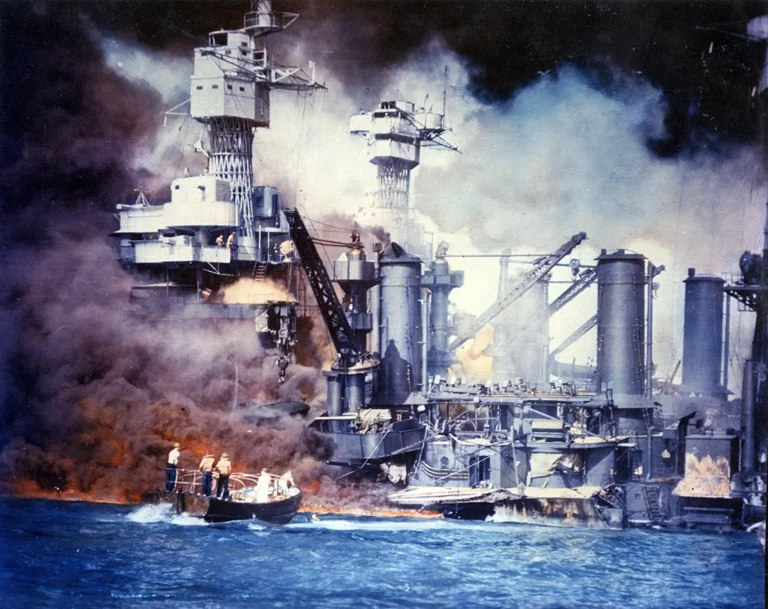
On December 7, 1941, Japan launched a surprise attack on the American naval base at Pearl Harbor in Hawaii,
inflicting heavy losses on the American fleet and leading to the United States’ declaration of war in World War II the following day.
The balance of power in World War II changed
The United States’ entry into the war marked a major turning point in the global conflict. With its full economic and military might, it joined the Allied forces, gradually shifting the balance of power against the Axis powers.
The following years witnessed major battles in the Pacific, culminating in Japan’s surrender in 1945 after the atomic bombings of Hiroshima and Nagasaki. This brought to a close one of the bloodiest wars in human history.
Historians emphasize that the decision to freeze Japanese assets remains a clear example of how economic sanctions can become a major factor in escalating international crises
when economic considerations intertwine with military and strategic interests. This has made the decision one of the most influential events in the history of international relations during the 20th century.