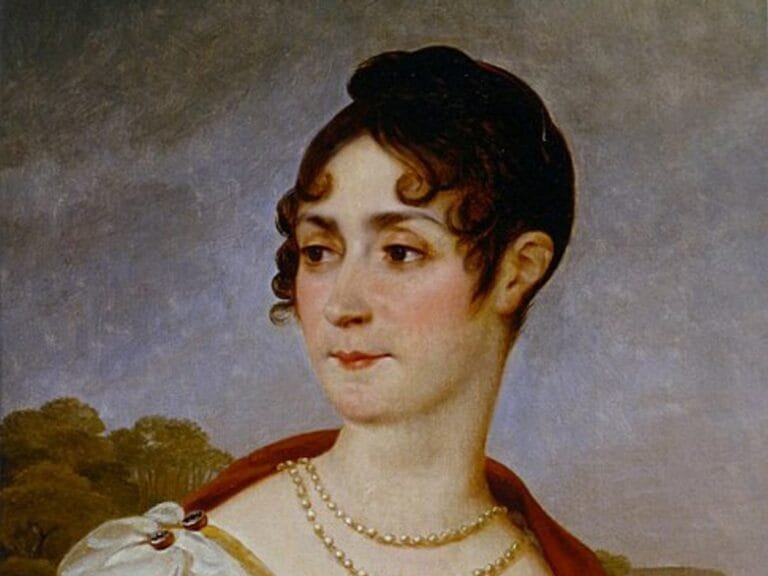
Paris, France – Empress Josephine de Beauharnais is one of the most prominent female figures who shaped pivotal turns in modern European history. Her name is forever linked to Napoleon Bonaparte’s meteoric rise to power, transitioning from the heart of imperial palaces to the harsh isolation imposed by the political and social circumstances of that era.
Early Life: Between Martinique and Parisian Turmoil
Born in the French colony of Martinique in 1763, Josephine moved to Paris to embark on a life full of transformations. She first married Alexandre de Beauharnais, a marriage that ended in separation and witnessed the bitterness of the French Revolutionary upheavals, which led to her husband’s execution. However, destiny had a new chapter in store for her when she met Napoleon Bonaparte, marrying him in 1796 and becoming the first Empress of the French in 1804 after his coronation.
Partner in Glory and Imperial Pressures
Josephine was not merely the Emperor’s wife; she played a central political and social role. Her wide network of relationships within the aristocracy enabled her to strengthen Napoleon’s presence within French society, especially during his early years of ascent. Nevertheless, this marriage was haunted by existential pressures; the lack of an “heir” to the imperial throne posed a constant threat to the stability of the Empire, casting a shadow over their relationship.
The Separation: Divorce for the Sake of the Throne
In 1810, Napoleon made the difficult decision to officially separate from Josephine, marrying Marie Louise of Austria in an effort to secure an heir to the throne. Despite the harshness of the separation, it did not entirely sever the human bonds between them; Josephine retained the title of “Empress,” and a relationship of mutual respect remained between her and Napoleon, who always acknowledged her status and role in his life.
Years of Quiet at Malmaison
After Napoleon’s fall and exile, Josephine chose to retreat to the Château de Malmaison near Paris. There, she spent her final years in relative seclusion, far from the imperial spotlight that had accompanied her for so long. In 1814, Josephine passed away due to pneumonia, closing the curtain on the life of a woman who combined influence and brilliance before ending her journey in quiet, far from the roar of the history she was once at the heart of shaping.