Cairo – Egypt — During these days, Egyptians invoke with profound historical pride the anniversary of the inauguration of Almaza Airport, one of the most prominent strategic and historical monuments in the upward trajectory of Egyptian aviation. This iconic facility was officially inaugurated by King Fuad I 93 years ago, marking the birth of Egypt’s first modern airport and positioning it as one of the most critical aviation hubs across the Middle East and the African continent during the first half of the 20th century.
The 1930s Boom and the Royal Launch to Connect Three Continents
The inception of the 1930s witnessed expanding institutional and legislative focus toward the aviation and logistical sectors in Egypt. This shift was designed to mirror the massive technological advancements and rapidly accelerating global air transport networks. This essential reality prompted the Egyptian government at the time to take a strategic sovereign decision to establish a highly modern international airport capable of hosting long-haul international flights, thereby linking the Egyptian state to emerging flight pathways weaving between East and West.
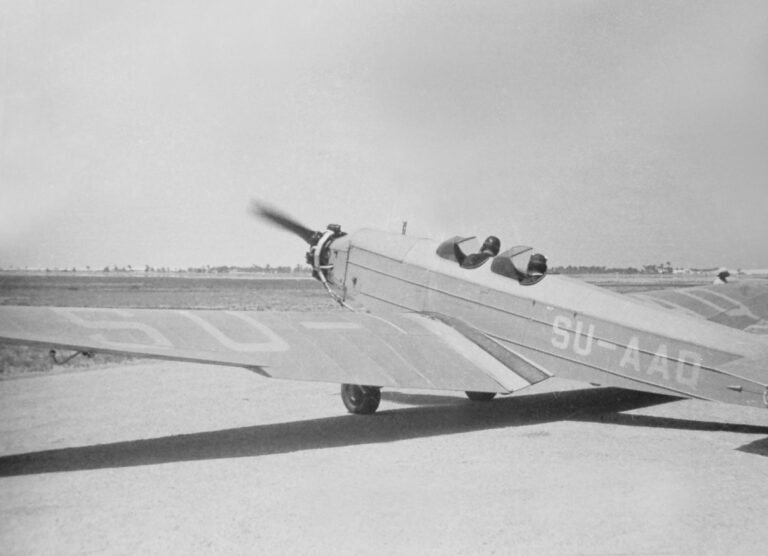
In the year 1933, King Fuad I officially inaugurated Almaza Airport in the northeastern district of Cairo, quickly transforming the facility into a pivotal nerve center coordinating both civil and military aviation assets. The airport played a monumental, long-arm role in receiving and organizing dense flights arriving from Europe, Asia, and Africa. During this historical window, Cairo functioned as a fundamental geopolitical and logistical junction along long-range international flight pathways.
World War II and Transmutation Into an Allied Logistical Stronghold
The airfield secured critical strategic and military weight owing to its unique and premium geographic placement. Within a handful of years, it morphed into a primary staging zone for organized flights and a national training center for piloting assets and flight crews. Furthermore, it directly participated in financing and standardizing the structural modernization of the Egyptian Air Force during the initial decades of its official founding.
Throughout the raging years of World War II, the vital and central role of Almaza Airport multiplied exponentially. Allied forces and their military formations relied heavily on the base as an exceptionally sensitive logistical and supply node inside the Middle East and North Africa theater. This operational importance heavily cemented its international profile as one of the most effective military airfields in the region throughout the span of the global conflict.
Urban Expansion and the Birth of Cairo International Airport
With the onset of massive urban and demographic expansion cutting across the capital city of Cairo, alongside the mounting volumes of postwar commercial civil aviation and multi-million passenger influxes, the state confronted an urgent necessity to launch a structurally larger, more technologically integrated airport facility. This compounding operational pressure subsequently led to the engineering and evolution of the current Cairo International Airport, which officially inherited the mantle to serve as the nation’s premier primary aerial gateway.
Despite the comprehensive transition of the bulk of commercial civil aviation traffic to the new Cairo International Airport, Almaza Airport dynamically sustained its prestige, institutional aura, and elevated military and historical stature. Its name remains profoundly intertwined in the public consciousness with critical evolutionary phases of Egyptian aviation development. Over many long decades, its runways bore witness to major geopolitical events and welcomed high-level official state visits of prominent world leaders, monarchs, and global figures.
Historical archivists and national heritage analysts assert that Almaza Airport was never merely a functional infrastructure asset for air transit; rather, it operated as a living sovereign symbol of a distinct era of modernization, structural reform, and comprehensive economic and cultural openness implemented by Egypt during the dawn of the 20th century. This legacy actively consolidated Egypt’s long-standing post as a pioneer regional transport intersection linking three continents. Today, more than nine decades since the first engines roared across its runways, the name “Almaza” remains vividly etched into the Egyptian national memory—standing as a living testament to the deep roots of flight history and the genesis of an ambitious journey that established Egypt as a premier leading aviation superpower across the Arab and African spheres.