California – United States — Google has announced the rollout of a suite of advanced security updates for its Android operating system, primarily aimed at fortifying user defenses against phone fraud and spoofed calls. This strategic deployment is part of the tech giant’s continuous and intensified cyber-defense efforts to counter mounting electronic threats, which are evolving rapidly as fraudsters devise increasingly sophisticated deception tactics worldwide.
Analyzing Suspicious Behaviors and Delivering Real-Time In-Call Alerts
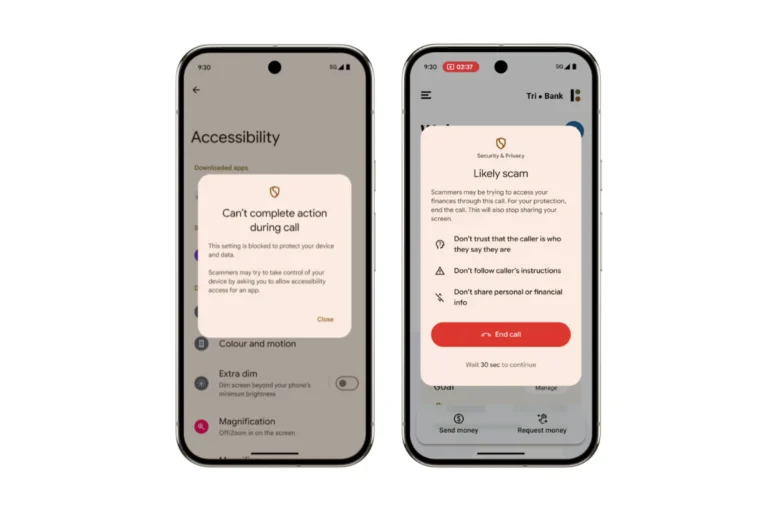
The new security update integrates a highly advanced monitoring framework that intercepts and analyzes suspicious call characteristics, automatically signaling potential hazards while the call is actively in progress. Under this system, users will receive instantaneous visual warnings on their phone screens the moment algorithms detect indicators or patterns of deception or social engineering. These scams typically aim to manipulate victims into disclosing personal records or highly sensitive financial and banking credentials.
This technological countermeasure comes in response to a sharp, record-breaking surge in digital fraud operations that strategically rely on impersonating government entities, banking institutions, or major service corporations. Fraudsters are now leveraging advanced programming techniques to spoof caller IDs, making unauthorized numbers appear entirely legitimate and official to build false trust and convince victims to reveal passwords, security codes, or credit card and bank account details.
AI Shields Vulnerable Demographics, but Awareness Remains the Primary Defense
According to the new update specifications, the system embedded within Android will analyze and evaluate specific verbal and behavioral benchmarks associated with fraudulent calls. These include high pressure to share One-Time Passwords (OTPs), attempts to persuade the user to download and install unverified external applications, or requests to grant unusual access privileges to the device. The system will proactively alert the user before they take any action that could jeopardize their privacy or financial assets. Through these protective capabilities, Google aims to mitigate the wave of fraud that specifically targets the elderly and less tech-savvy users—demographics categorized as the most vulnerable to these cyberattacks, which inflict billions in financial losses globally every year.
In this context, cybersecurity experts and threat analysts view the strategic implementation of artificial intelligence to identify suspicious behavioral variations within live voice calls as a pivotal paradigm shift in consumer digital protection. This is especially critical given the rising utilization of deepfake audio cloning and synthetic messaging, which have become more convincing and precise than ever before. Despite this advanced security arsenal, Google emphasizes that digital literacy and user awareness remain the absolute first line of defense against scammers. The company reiterates its call for users to never share personal data or secret codes over the phone and to decisively verify the caller’s true identity before responding to any requests involving financial transactions or sensitive information. This step underscores a broader global trend among tech giants toward embedding native, AI-driven cybersecurity mechanisms directly into core operating systems to repel the highly complex tactics of modern cybercrime.