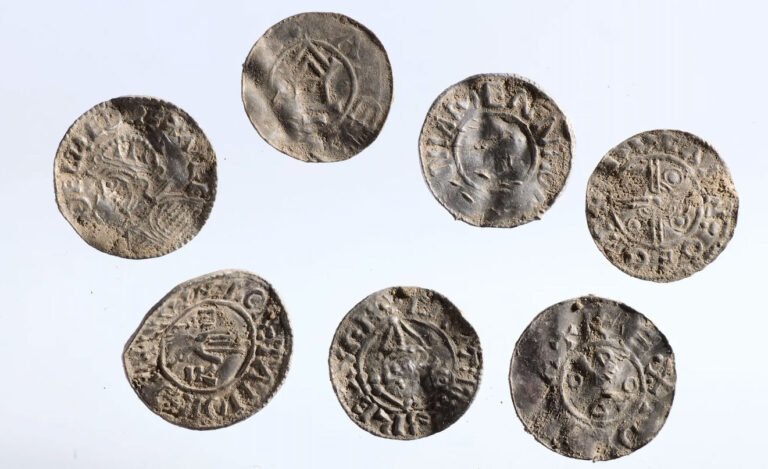
Oslo – Archaeologists in Norway have announced an “extraordinary discovery” from the Viking Age, considered one of the largest monetary hoards ever found in the North. The treasure, unearthed at an archaeological site in the northern part of the country, was not just pieces of metal but an “economic map” that shocked researchers with rare silver coins bearing inscriptions from the Islamic Empire and Western Europe. Obviously, this May 2026 discovery will rewrite Viking history, transforming them from mere “raiding warriors” into “global traders” who possessed relationship networks spanning continents over a millennium ago.
“Transcontinental Trade”: How Did Islamic Coins Reach the Far North?
Researchers explained that the presence of coins from distant regions like the Middle East confirms that Vikings were skilled trade intermediaries, linking the civilizations of the ancient world through complex trade routes. Accordingly, experts believe this discovery shatters the stereotypical image of Vikings and proves their economic power rivaled their military might. Clearly, the volume of wealth discovered reflects unprecedented prosperity in Northern Europe during that era, opening the door for new studies on the scale of gold and silver circulating among Northern peoples.
“The Secret of the Burial”: Did the Vikings Flee a Sudden Conflict?
Preliminary studies suggest that the manner in which the treasure was found indicates it was hidden under “emergency conditions” and in a hurried fashion, favoring the hypothesis of a military conflict or imminent threat that forced its owners to bury it. As a result, historians are currently attempting to link the date of the treasure’s burial to political events and wars witnessed in the region at the time. Amidst this archaeological momentum, the Norway hoard remains living proof that the earth still hides many secrets that could entirely change our understanding of human history.