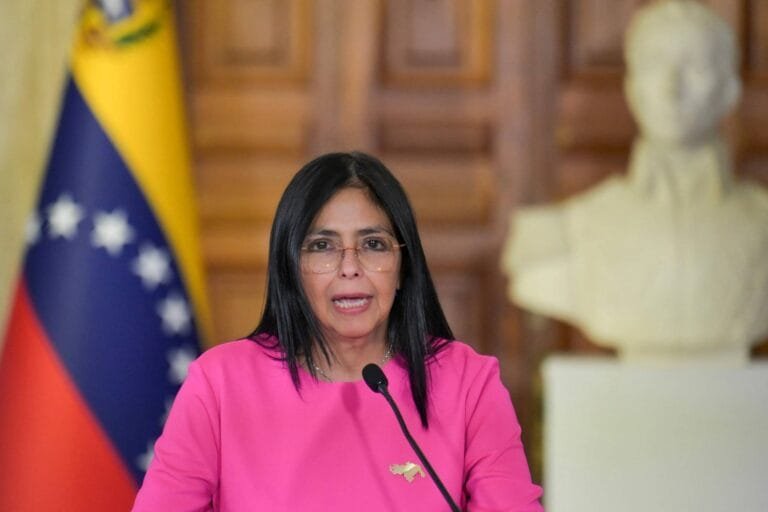
Caracas, Venezuela – Venezuelan interim president Delcy Rodríguez asserted that the U.S. military operation in January that resulted in the arrest of Nicolás Maduro marked a pivotal turning point in Venezuela’s political trajectory. In a speech delivered in the capital, Caracas, Rodríguez described the resumption of diplomatic relations with the United States as the “right path” for the future of the country and its citizens.
Diplomacy as a path to a solution
The interim president stressed the importance of using diplomatic channels to resolve the disputes between Caracas and Washington, noting that the events following January 3rd have reshaped Venezuela’s vision of international relations.
While Maduro and his wife, Cilia Flores, are in New York awaiting trial on drug trafficking charges, Rodríguez is seeking to leverage Venezuela’s vast energy potential. She aims to transform the country’s natural resources into tangible benefits for the Venezuelan people.
Political and economic breakthrough
The past few months have witnessed a significant shift in the US position, with Washington lifting sanctions on Rodríguez and recognizing her as Venezuela’s president. This has paved the way for Caracas to rebuild its relationships with Western banks and attract US investment.
Despite these gains, talk of elections in Venezuela remains absent from the scene, as Rodríguez has exceeded the constitutional deadline set by the Supreme Court (90 days) for assuming the presidency temporarily. In response to journalists’ questions about the election date, she said, “I don’t know… sometime.”
International criticism and future uncertainty
This rapprochement raised questions in American political circles, with Senator Jeanne Shaheen demanding that the Trump administration explain the reasons for the “preferential treatment” given to Rodriguez. She described Rodriguez as a key figure in the previous regime.
In a letter to Secretary of State Marco Rubio, Shaheen and Senator Elizabeth Warren criticized the lifting of sanctions without concrete steps being taken to restore democratic order.
For his part, Rick de la Torre, former CIA station chief in Caracas, explained that protecting Rodriguez falls within the framework of the Trump administration’s current foreign policy objectives. This policy aims to provide the administration with “ventilation and incentives” to solidify American investment.
However, de la Torre cautioned that these privileges will not last, emphasizing that Rodriguez, despite her history with the previous regime, will ultimately face accountability.